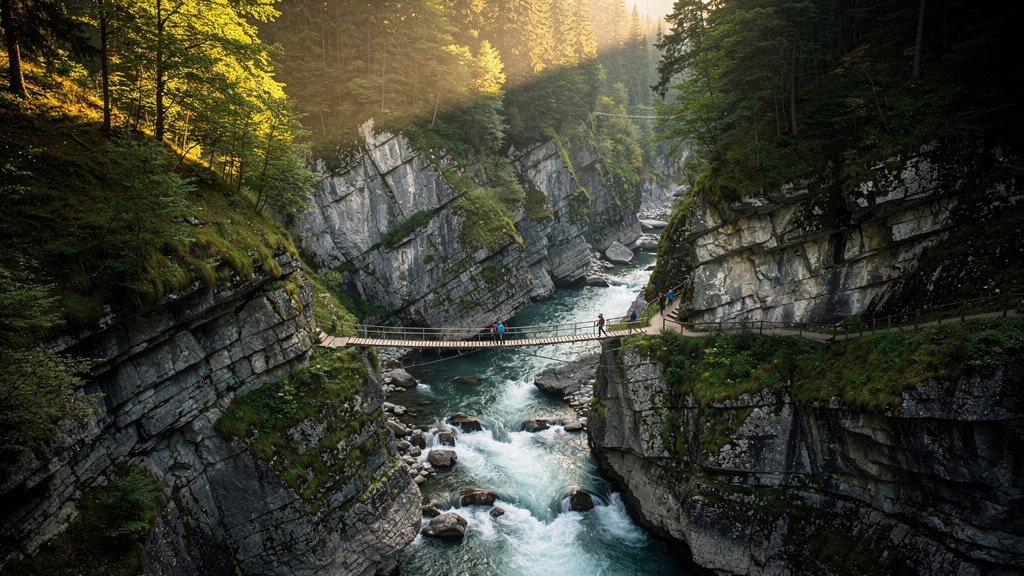
The key to getting through Devil’s Gorge is not its length, but the short yet steep section with a metal ladder. The entire hike takes around two to two and a half hours for the approximately 5-kilometer circular route, but preparing for this particular vertical challenge is crucial for safety.
This hidden gem near Tran offers an escape from crowded tourist spots. Unlike popular mountain resorts, it provides an authentic, rugged natural experience with almost no commercial infrastructure – a rarity in Bulgarian tourism as of 2026. The lack of mobile coverage and restaurants adds to the feeling of a real adventure.
Successfully navigating this Hiking route depends less on sheer endurance and more on proper planning – avoiding wet weather and carrying suitable equipment for slippery and uneven terrain. This is a test of good judgment, not speed.
What is Devil’s Gorge and why is it worth visiting?
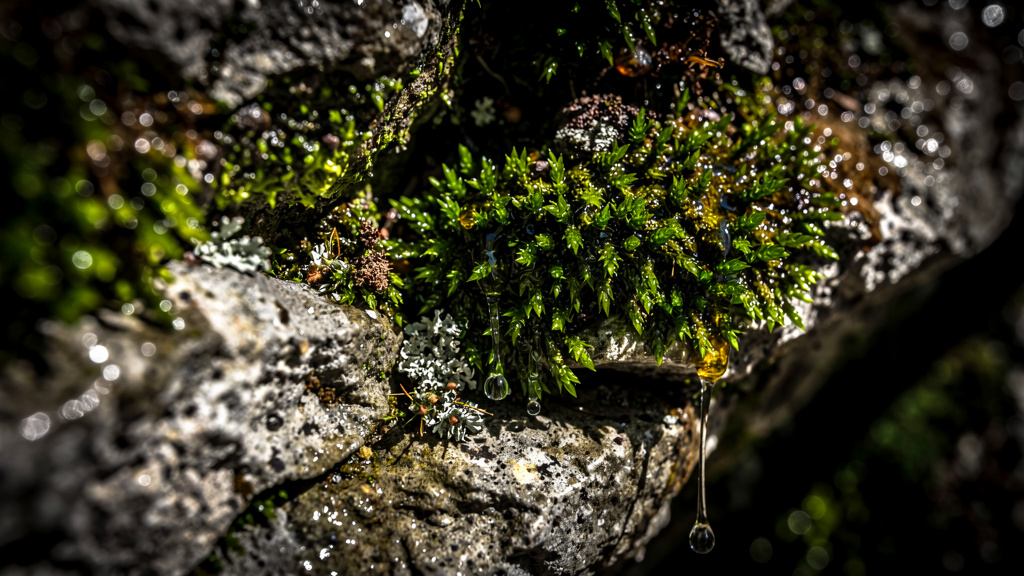
Devil’s Gorge is the most spectacular section of the Tran Eco Trail, located along the Erma River. It is a narrow, rocky gorge crossed by a series of wooden footbridges that allow hikers to move literally above the water. Its name comes from the steep and challenging nature of the terrain in this section.
The eco-trail was built in stages, with the main work carried out in the late 1990s and early 2000s to make one of the wildest parts of the Erma River gorge accessible. According to data from the Ministry of Tourism, the Tran Gorge is among the routes with different levels of difficulty, attracting a wide range of visitors.
The main attraction is the views from inside the gorge looking out. Moving across the bridges reveals impressive rock formations, small cascades and the feeling of being completely immersed in nature, something you cannot experience from standard forest trails. This makes it a magnet for photography enthusiasts and thrill-seekers.
Is this hiking route suitable for everyone?
Is the route to Devil’s Gorge suitable for children and beginner hikers?
Yes, most of the route is easy, but the “Devil’s Ladder” section is steep and is not recommended for very young children or people with a strong fear of heights.
Accessibility here is not simply a matter of overall physical fitness, but also of being comfortable with heights and steep climbs. The expert advice is to assess it individually. While the main Hiking route is a pleasant walk, the final section in the canyon requires concentration and stability.
The route is not suitable for people with balance problems, a strong fear of heights (acrophobia), or small children who cannot move completely independently. The lack of railings in places and the near-vertical metal ladder create a real risk. A typical example is a family with children under 10 – the hike can be more stressful than enjoyable if the child becomes frightened.
Main difficulty: “Devil’s Ladder” – a near-vertical metal ladder
Biggest risk: Slippery rocks and bridges after rain
Contraindications: Strong fear of heights, small children
Missing infrastructure: No mobile network coverage in the canyon
The specific thing you should do is make an honest self-assessment. If the thought of climbing a nearly vertical ladder above a river makes you uncomfortable, it is better to enjoy the easier section of the eco-trail before the canyon.
Route stages: from the start to the canyon
How long does it take to reach the “Devil’s Ladder” and is the initial section easy?
It takes around 35–40 minutes to reach the “Devil’s Ladder” from the start of the eco-trail. The first 20 minutes of the hike are along a flat dirt road and are extremely easy.
The hike can be divided into three main sections. Understanding them helps you pace yourself properly and stay oriented along the route.
Stage 1: The flat section (about 20 minutes)
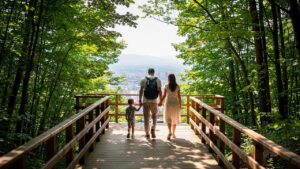
The beginning of the trail is wide and flat. You walk along a dirt road beside fish ponds, with no climbing at all. This section is suitable for absolutely everyone and offers a relaxed introduction to the atmosphere of the area. The pace here is easy and no effort is required.
Stage 2: The climb through the forest (about 15–20 minutes)
After the flat section, the trail enters the forest and the incline increases sharply. This is the only more serious and sustained climb along the entire Hiking route. Although steep, it is short and shaded. This is the point to test your breathing and fitness before entering the technical section of the canyon.
Stage 3: The canyon and bridges (about 30 minutes)
After the climb comes a descent toward the river itself and entry into Devil’s Gorge. Here the trail transforms into a series of narrow wooden bridges, ending with the notorious “Devil’s Ladder”. This stage requires the most attention, with slow and careful movement. After the ladder, there is a short section leading to the exit of the canyon.
What are the most common mistakes tourists make?
What footwear is best suited to the terrain of Devil’s Gorge?
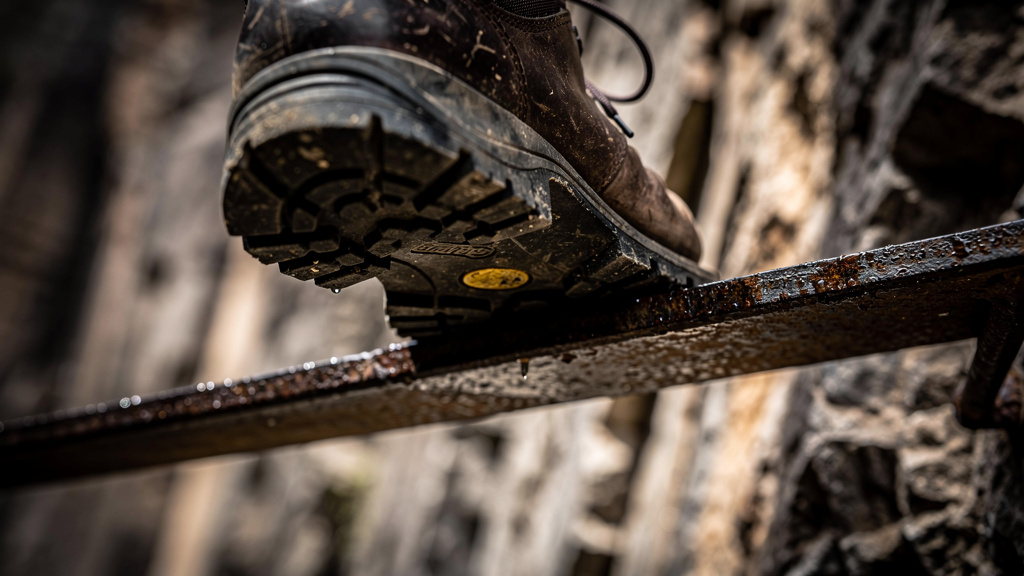
Hiking shoes with good tread are the best choice. The terrain is slippery, especially on the bridges and rocks, so sneakers with smooth soles are extremely unsuitable and dangerous.
The most common mistake is underestimating the terrain. Many visitors set off in casual shoes or sandals, attracted by the short 5-kilometer length of the route. This is critically dangerous because the wooden bridges and rocks are almost always wet and slippery, even in dry weather. The right footwear is the most important part of your equipment.
Another serious oversight is not bringing enough water. There are no drinking-water fountains along the entire Hiking route. Although the hike is relatively short (around 2.5 hours), the climb through the forest and the tension in the canyon can lead to dehydration, especially on a warm day. Carrying at least 1 liter of water per person is essential.
Visiting in unsuitable weather is the third critical mistake. Experienced hikers avoid the route immediately after rain. Mud on the forest trail and slippery bridges turn the hike from an enjoyable outing into a challenge and greatly increase the risk of slipping and falling. Always check the weather forecast the day before you leave.
Practical tips for a perfect experience
To get the most out of this unique Hiking route, a few expert tips can completely change the experience. Proper preparation starts at home. Besides water and suitable shoes, put a small pack of wet wipes and some bandages in your backpack – the most common minor incidents are scrapes and abrasions.
Parking is available in an improvised parking area at the start of the trail, near the turn-off for the village of Bankya. On weekends in 2026, the area fills up quickly. If you arrive after 10:00 a.m., you may have to park farther along the road. The solution is to arrive earlier so you can avoid the stress and encounter fewer people on the trail.
Best time to visit: May–June and September–October, weekdays
Essential equipment: Hiking shoes with good tread, water (1L/person)
GPS coordinates of the start: 42.8275, 22.9461 (approximate)
Photography time: The canyon has the best light in the early afternoon
Do not rush. The beauty of Devil’s Gorge is in the details – stop on the bridges, look at the rocks, listen to the river. This Hiking route is not a race. The best experience comes when you allow enough time to take in the wild nature without watching the clock.
Frequently Asked Questions
How steep is the climb on the trail to Devil’s Gorge and how long does it take?
The only significant climb is through the forest, after the initial flat section. It is steep but relatively short, taking around 15–20 minutes at a normal pace. After that comes a descent into the canyon itself, where the challenge is more technical than endurance-based.
Can you hike to Devil’s Gorge if it has rained recently?
It is not recommended. After rain, the forest section becomes very muddy, while the wooden bridges and rocks inside the canyon become extremely slippery. The risk of slipping and accidents increases significantly. For a safe and enjoyable experience, choose a day with a dry forecast.
Is the entire route to Devil’s Gorge along a dirt road?
No, only the first 20 minutes are along a wide, flat dirt road. After that, the trail enters the forest and becomes narrow and steep. Inside the canyon, you walk across purpose-built wooden bridges and climb a metal ladder. The variety of terrain is part of what makes the route attractive.
Is there an entrance fee for the Tran Eco Trail and Devil’s Gorge?
No, as of 2026, access to the Tran Eco Trail and Devil’s Gorge canyon is completely free. There are no entrance or parking fees. Your only expenses will be transportation to the starting point of the route and the food and water you need to bring yourself.
What else can be seen around Tran?
The Tran area is rich in attractions. You can combine the walk with a visit to the Erma River gorge (different from the eco-trail), the rock chapel of “St. Petka”, the Yogurt Museum in the village of Studen Izvor, or take a walk around the town of Tran itself.
Is the route dangerous and are there safety installations?
The route has sections of increased difficulty, especially the “Devil’s Ladder”. Wooden bridges have been built, but railings are missing in many places. Safety depends mainly on your judgment, appropriate footwear and caution. It is not suitable for people with no experience at all or for those with a fear of heights.