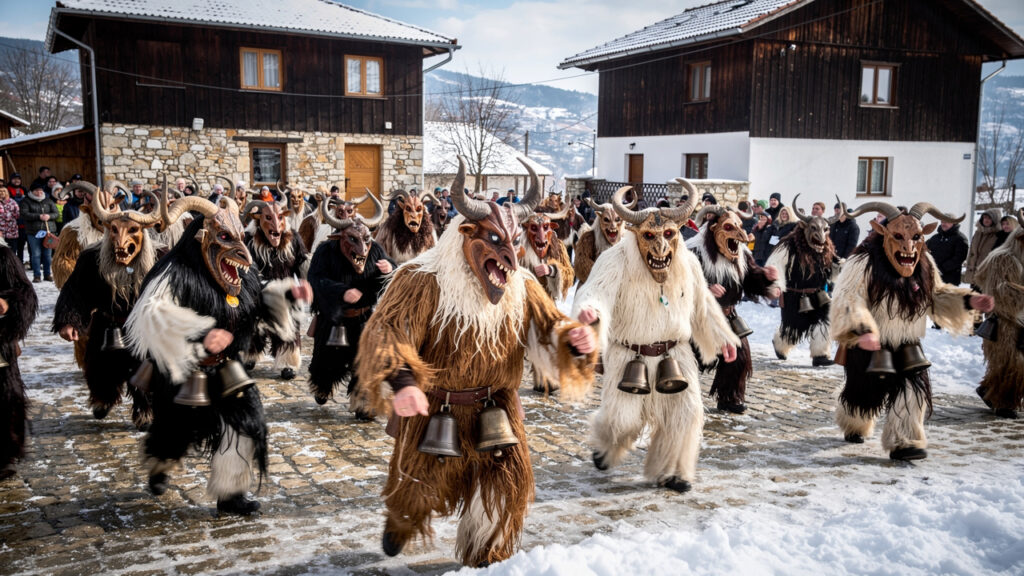
Kukeri games are ancient Bulgarian rituals intended to bring fertility and drive away evil, traditionally held between January and March. Their calendar varies from place to place, with most events taking place around Sirni Zagovezni (Shrove Sunday).
- The largest festival, Surva in Pernik, is included on UNESCO’s Intangible Cultural Heritage list.
- Official calendars are often incomplete, so keep an eye on local municipal announcements for the latest dates.
- Alongside the Kukeri, you will come across regional traditions known as Dzhamali, Babugeri and Stanchinari.
- Book accommodation months in advance, especially in popular destinations such as Pernik, Yambol and Shiroka Laka.
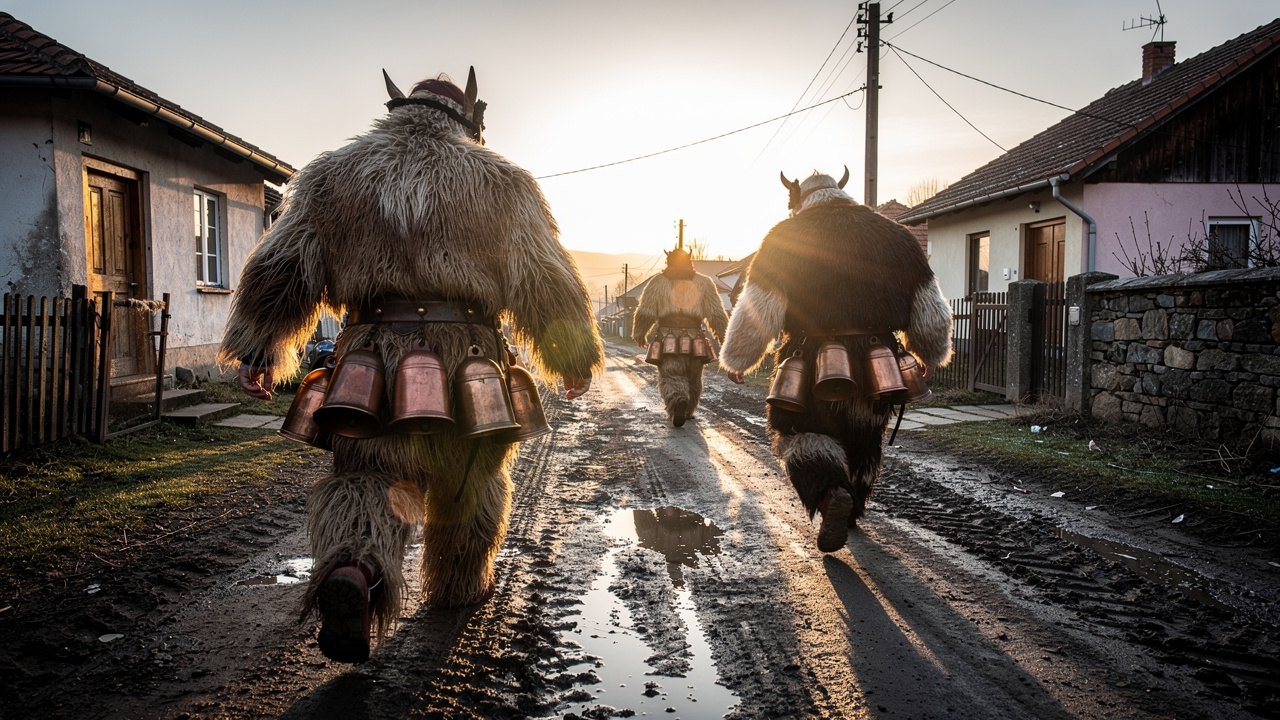
- The costumes can weigh as much as 50–60 kilograms, while the bells (chanove) are essential for driving away evil spirits.
The key to getting the most out of the Kukeri games is not finding a single national calendar, but understanding their seasonal and local character. Most rituals take place between January and March, with the peak around Sirni Zagovezni, whose date changes every year. For accurate information, always check the websites of the relevant municipalities in the weeks leading up to an event.
This is a living tradition that connects generations and offers a powerful sensory spectacle: the roar of hundreds of bells, elaborate handmade costumes and raw energy. One of the most impressive events is the Surva Festival in Pernik, recognised by UNESCO as part of the world’s intangible cultural heritage. It is a powerful and authentic experience.
Yet the real magic of the Kukeri games is often found not at the large festivals, but in small village rituals. There, the tradition has been preserved in its purest form, giving you a chance to witness customs that have been passed down for centuries.
| Festival / Region | Main period | Scale and character | What to expect | Practical tips |
|---|---|---|---|---|
| Surva, Pernik | Late January | International festival, thousands of participants | Organised spectacle featuring parades, stages and competitions. | Book accommodation 6+ months ahead. Park outside the city centre. |
| Kukerlandia, Yambol | Around Sirni Zagovezni | Large, lively national festival | Carnival atmosphere, with a focus on the Kukeri tradition of Thrace. | Suitable for families, but be prepared for large crowds. |
| Shiroka Laka | First Sunday in March | Authentic ritual known as Pesponedelnik | Mysterious and symbolic, with distinctive ash-covered faces and rituals to drive away evil. | The village is small and interest is huge. Arrive early in the morning. |
| Razlog / Bansko | 1 January (Starchevata) | Local carnivals, with strong rivalry | Noisy New Year rituals featuring unique costumes and competitions between neighbourhoods. | Expect cold weather. Combine your visit with a ski holiday, but check for road closures. |
The Kukeri Calendar: From New Year to Shrove Sunday
When are the Kukeri games held during the year?
The main season for Kukeri games runs from January to March, with the peak around Sirni Zagovezni (Shrove Sunday). Some rituals, such as Surva in the Pernik region, also take place around New Year.
The calendar of the Kukeri games is closely linked to the agricultural cycle and Christian holidays, but it is not fixed. The main period runs from Christmas to Easter and is divided into two main waves. The first takes place around New Year (Vasilovden), when the Surva rituals are held in Western Bulgaria, particularly in the Pernik region.
The second, larger wave centres on Sirni Zagovezni (Sirnitsa). Since this is a movable feast linked to Easter, the dates of the games change every year. According to the State Agency for Bulgarians Abroad, this period, at the beginning of the Easter fast, is particularly important for Kukeri customs in Thrace and along the Struma River. The best approach is to follow municipal websites, as official national calendars, including those published by the Ministry of Culture, sometimes leave out local events, as shown in some of its documents (PDF).
A useful rule of thumb is to start checking for information in late December for January events, and in late January for those around Sirnitsa. This gives you enough time to plan your trip.
What Is the Difference Between Kukeri, Survakari and Dzhamali?
What is the difference between Kukeri, Survakari and Dzhamali?
These are regional names for similar masked rituals. Survakari are typical of Western Bulgaria around New Year, Kukeri of Thrace around Sirni Zagovezni, and Dzhamali of Eastern Bulgaria.
It is common to refer to all masked participants by the general name “Kukeri”, but there are important regional differences and names. These reflect the specific features of each ritual, the time of year when it takes place and the local tradition. Understanding them adds depth to the experience and helps you appreciate the variety of these customs.
Survakari (also known as survashkari) are typical of Western Bulgaria, especially the Pernik and Breznik regions. Their celebration is Surva, marked on 1 January or on 13–14 January according to the old calendar. Their costumes are often made from rags and animal skins, while their masks are zoomorphic, made of wood and adorned with horns.
Regional name: Babugeri (Razlog, Bansko)
Main feature: Tall, cone-shaped costumes made of goat skins
Distinctive sound: The deafening clang of heavy, rounded bells
Ritual: “Starchevata” – a symbolic competition between neighbourhoods
Kukeri are most common in Thrace and along the Struma River valley. Their rituals are associated with Sirni Zagovezni and symbolise ploughing, sowing and fertility. Their costumes are elaborate, often made entirely of animal skins, and their masks are intricate and tall.
Dzhamali are found mainly in Eastern Bulgaria. Their ritual often features a camel-like figure made from a wooden frame covered with fabric. This custom is also intended to drive away evil and bring health and fertility in the coming year.
Planning Your Visit: Beyond the Major Festivals
How can I find information about authentic Kukeri rituals in small villages?
For an authentic experience, check the Facebook pages of local community centres. They often post information about when Kukeri groups will be going from house to house in the village, away from the major festival venues.
To experience the authentic atmosphere of the Kukeri games, the best approach is to visit smaller settlements on the day of the actual ritual. Instead of going only to the organised festival venue, find out which nearby villages have their own Kukeri groups and when they go from house to house. This information is often posted on the Facebook pages of local community centres or on regional news websites.
For example, instead of battling the huge crowds in Yambol during Kukerlandia, you could check the programmes of nearby villages such as Kabile, Chargan or Mogila. On the day before or after the main festival, local groups perform the ritual in their own village. The experience is much more personal and immediate, without barriers or staged performances.
This approach takes a little more planning, but it lets you see the custom in its natural setting. You can witness Kukeri being welcomed into people’s homes, hear their blessings for the householders and experience the sense of community that is missing from the big festival stages. Ask local people where best to watch – they will be happy to point you in the right direction.
Common Mistakes to Avoid When Visiting Kukeri Games
The most common mistake is underestimating the weather and the scale of the event. Many visitors arrive at the last minute, expecting to find parking easily and get a good viewing spot, only to end up stuck in traffic and far from the action. This is especially true of popular destinations such as Pernik, Yambol and Shiroka Laka.
Another mistake is wearing the wrong clothes. The Kukeri games take place during the coldest months of the year. Even on a sunny day, temperatures can be low, and spending several hours outdoors calls for warm layers and comfortable, waterproof shoes. Mud is almost unavoidable, especially in smaller villages.
Main mistake: Arriving less than an hour before the announced start
Safety risk: Getting too close to the dancing groups
Wrong expectation: Expecting the event to follow a strict concert-style schedule
Practical problem: Relying only on card payments in small villages
Getting too close to the participants is also risky. The Kukeri wear heavy costumes and bells, move energetically and often cannot see well through their masks. Keep your distance to avoid accidents and stay out of the way of the ritual. Remember, this is not a performance put on for tourists, but a living custom with its own rules.
Symbolism in the Costumes and Rituals
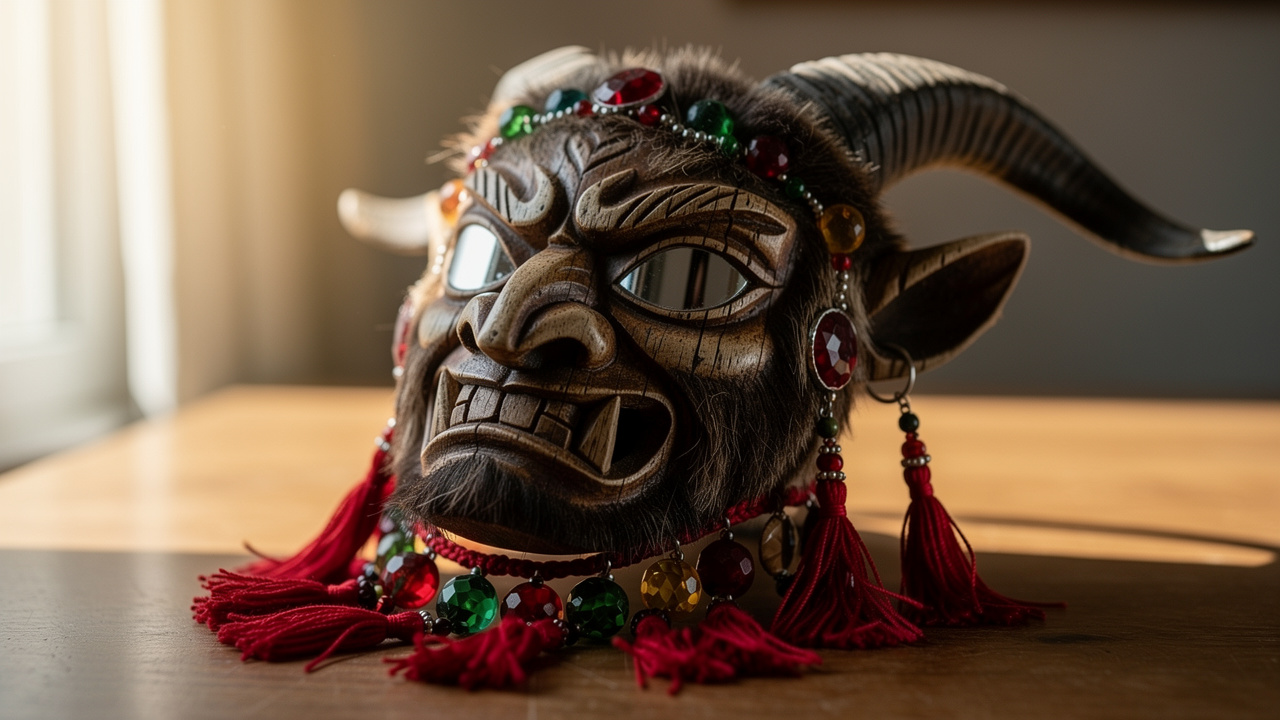
Every element of a Kukeri costume and ritual carries a deep symbolic meaning, tied to the transition from winter to spring and the eternal cycle of life and death. Masks are central to the tradition. They are meant to look as frightening as possible, scaring away the evil forces believed to have gathered over the winter. They are often zoomorphic, with horns, teeth and feathers, or depict elaborate characters.
The deafening clang of the bells (also called zvantsi or tuchove) is another key element. The sound is believed to purify the surroundings and awaken the earth for new life. The bells can weigh dozens of kilograms, making them a test of the men’s endurance and a symbol of their strength.
The ritual actions themselves are also rich in symbolism. Ploughing and sowing, as well as the symbolic “death” and “resurrection” of the chief Kukeri figure, represent fertility and nature’s rebirth. Red, a colour often seen in the costumes, symbolises life, the sun and good health. Understanding these elements turns watching the Kukeri games from a simple spectacle into a deeper, more meaningful experience.
Before setting off for your chosen destination, check the weather forecast, make sure you have enough fuel and carry some cash. In many of the smaller settlements where the real magic happens, you may not find an ATM or a working card terminal.
Frequently Asked Questions
Is there a single official calendar for all Kukeri games in Bulgaria?
No, there is no single, comprehensive official calendar. The Ministry of Culture and tourism websites publish information, but it is often incomplete. The safest way to find the exact dates is to follow the websites and social media pages of the municipalities and community centres organising the events.
Which places in Bulgaria are best known for Kukeri games?
The best-known and largest events are the international Surva Festival in Pernik (late January) and Kukerlandia in Yambol (around Sirni Zagovezni). Other popular and highly authentic rituals take place in Shiroka Laka, Razlog and Bansko, as well as in villages along the Struma River valley.
What should I know before visiting a Kukeri festival for the first time?
Dress warmly and wear waterproof shoes. Arrive at least an hour early to find somewhere to park. Carry cash, especially in smaller settlements. Keep your distance from the participants, as their costumes are heavy and their visibility is limited. Be prepared for loud noise and crowds.
Are the Kukeri games connected with Sirni Zagovezni?
Yes. Many of the best-known Kukeri rituals, especially in Thrace, are directly linked to Sirni Zagovezni (Sirnitsa). The feast marks the beginning of the Easter fast and is a time of purification. Kukeri games held during this period symbolise driving away evil and awakening nature for a new cycle of life and fertility.
Can children take part in or safely watch the Kukeri games?
Children can safely watch as long as they are supervised by an adult and kept at a sensible distance from the action. The sound of the bells can be very loud, and some masks are quite frightening, which is worth bearing in mind with younger children. Traditionally, the rituals themselves are performed by boys and men, but modern festivals also include children’s groups.
What is the symbolism of Kukeri masks?
The main purpose of the masks is to look as frightening as possible, scaring away evil spirits. They often combine human and animal features (zoomorphic elements), such as horns, teeth and feathers, which symbolise primal strength. Mirrors attached to some masks are believed to send evil back to its source. Every mask is a unique work of art.