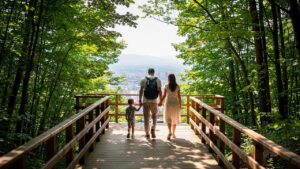
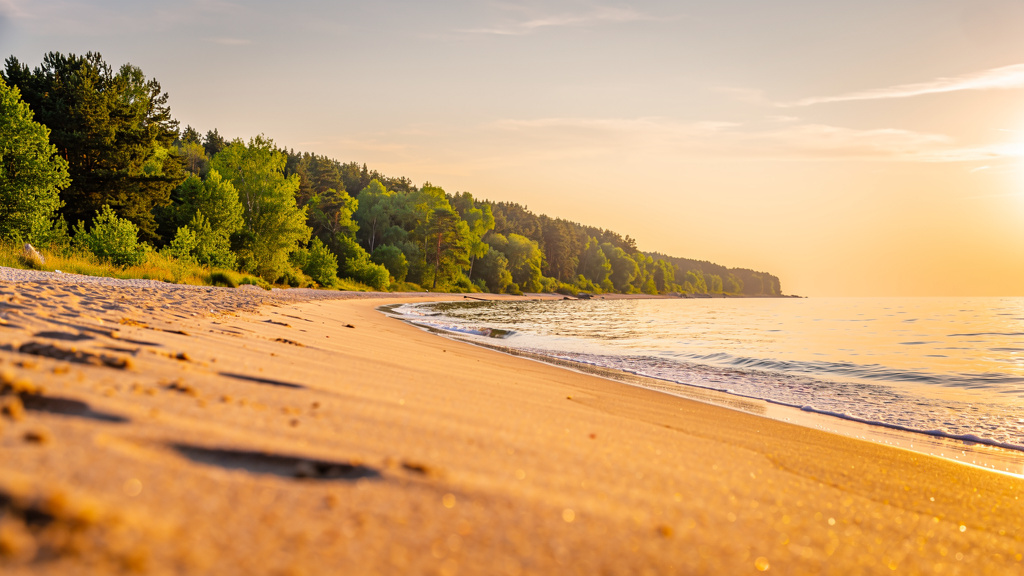
The hiking route to Irakli is a moderately difficult trek that takes around 1.5–2 hours each way. There are essentially two access routes – a shorter one from the village of Banya and a longer, more scenic one from the village of Emona.
- Choose the route through the village of Banya for shorter and more direct access to the beach.
- The route from the village of Emona is longer, but offers impressive views of Cape Emine.
- Carry at least 2 liters of water per person, as there are no fountains or springs along the trails.
- Avoid the hike after heavy rain, as the trails become muddy and very slippery.
- The best time to visit is June and September, when there are fewer people and the heat is more manageable.
The main hiking route to Irakli Beach requires choosing between two approaches with different lengths and terrain. The faster option starts from the area around the village of Banya and takes about an hour and a half, while the more scenic but longer route begins in the village of Emona and offers breathtaking views along the ridge.
Unlike most beaches accessible by car, Irakli remains one of the last spots along the Bulgarian Black Sea coast to retain its wild character. In 2026, its value as a destination for nature-friendly tourism is greater than ever, attracting people looking for an authentic experience away from commercial areas.
The trend is clear – more and more travelers prefer destinations that require some effort because this means fewer crowds and cleaner nature. The hike to Irakli is the filter that helps preserve the atmosphere of the place.
| Parameter | Route via Banya | Route via Emona |
|---|---|---|
| Starting point | Turn-off after Banya (toward Varna) | End of Emona village |
| Hike length | About 4–5 km each way | About 7–8 km each way |
| Approximate time | 1.5–2 hours each way | 2.5–3 hours each way |
| Parking | Unattended parking before the start of the dirt road | In the village, near the start of the trail |
| Advantage | Faster and more direct access to the beach | Panoramic views of the sea and Cape Emine |
How to get to Irakli: the two main approaches
Which is the easier route to Irakli – via Emona or Banya?
The route from the village of Banya is significantly shorter and has less elevation gain, making it the easier and preferred choice for most visitors looking for quick access to the beach.
Access to the wild Irakli beach is mainly via two hiking routes that start from different points. The choice between them depends on your fitness level and whether you prefer speed or scenic views. Both routes lead to one of the cleanest beaches along our coast.
The first and more popular option is via the village of Banya. If you are traveling from Burgas, drive past the village and look for a turn-off on the right. From Varna, the turn-off is on the left, shortly before Banya. After a short drive on an asphalt road, it turns into a dirt road. Most people leave their cars in an improvised parking area before the dirt road begins, as it is often in poor condition. From there, the hike is mostly through the forest and takes about an hour and a half.
The second option is for lovers of longer hikes and panoramic views. It starts at the end of the village of Emona, located on the cape of the same name. The trail follows the ridge and opens up incredible views of the sea. This route is longer, around 15 km in both directions, and requires better physical fitness. The best approach here is to set off very early in the morning to avoid the midday heat, especially in summer.
What is the actual difficulty and how long does the hike take?
How long is the hiking route to Irakli?
The length varies depending on the starting point. From Banya, the hike is about 4–5 km one way, while from Emona the distance to the beach is around 7–8 km.
The technical difficulty of the route is considered moderate. This means it does not require special climbing skills, but it does involve uneven forest trails with ascents and descents. The physical effort is also moderate, but it should not be underestimated, especially during the hot summer months.
The main challenge on the route from Banya is the final section before the beach, which is steeper. After rain, the trails can become very muddy and slippery, significantly increasing the difficulty. The hike one way usually takes between 1.5 and 2 hours at a relaxed pace, including short breaks. The total hike for the day, if you return to your car, is around 8–10 km.
Total elevation gain: About 480 m (for the Emona route)
Terrain type: Forest trails, dirt road
Biggest challenge: Muddy sections after rain
Essential equipment: Comfortable closed shoes with good grip
A practical example of the effort involved is that someone with no mountain experience at all can feel seriously tired toward the end. That is why it is important to assess your own abilities. If you are unsure, choose the shorter route from Banya and allow yourself more time for breaks.
Hidden risks and common mistakes on the trail
The most common mistake hikers make is underestimating how much water they need. There are no fountains along the route or at Irakli Beach itself. On a hot day, a person needs at least 2 liters of water just for the round-trip hike, without counting time spent on the beach. Carry more than you think you will need.
Another hidden risk is sea currents. Even in calm weather, underwater currents can appear around Irakli that are not visible from the shore. Always swim parallel to the shore if you feel yourself being pulled out, and avoid swimming far from land alone. Experienced locals always check the swell forecast before setting out.
Wearing unsuitable footwear such as flip-flops or sandals is a sure recipe for trouble. The trails are uneven, with roots and rocks. Sturdy closed shoes are absolutely essential to avoid a sprain or more serious injury. Also remember to bring insect repellent, especially on the forest sections around dusk.
What is the best time to visit Irakli?
When is the best time for a hike to Irakli?
The best months are June and September. The weather is warm but not excessively hot, and the crowds of the peak season (July and August) are significantly smaller.
Although July and August may seem like the obvious choice, they are the most challenging months for a hike to Irakli. High temperatures and large numbers of visitors can spoil the experience. True nature lovers prefer the shoulder seasons.
June and September offer the perfect balance. Temperatures are more manageable, making the hike itself much more pleasant. The water is still warm enough for swimming, while the beach is considerably quieter. You can then enjoy the more than 3 km long beach, which is part of a protected area, almost by yourself. According to official data, the beach is exceptionally clean and free of stones.
Peak season: July – August
Recommended period: June and September
Off-season risk: Unstable weather, muddy trails
Critical limit: Avoid hiking when storms are forecast
Spring (late April and May) is also a wonderful time for the hike itself, when nature is in full bloom. The beach, however, may not be suitable for swimming, and the weather is more unpredictable. Current conditions in 2026 show increased interest in these periods precisely because of the more sustainable nature of tourism.
Beyond the beach: what else to see around Irakli
The best way to approach a visit to Irakli is to combine it with exploring the surrounding area. Instead of focusing only on the beach, set aside some time for the village of Emona and Cape Emine – the easternmost point of the Balkan Mountains, where the mountains meet the sea.
The village of Emona is a place with a rich history and an authentic atmosphere. It is believed that the Thracian king Rhesus was born here. You can explore the remains of the old fortress and the lighthouse at Cape Emine. The view from there is magnificent and well worth the extra effort. It is also the endpoint of the European long-distance hiking route E3, known as “Kom–Emine”.
If you are traveling by car, you can also make a quick trip to the nearby town of Obzor for a meal or to see the remains of a Roman fortress. Combining the hike with cultural tourism turns a day at the beach into a full-fledged trip. Before setting out, always check the latest information online about access and trail conditions.
Frequently Asked Questions
What is the most important thing I should know about Irakli Beach?
The most important thing is that Irakli is a protected area with a wild beach and almost no infrastructure. This means you need to bring everything you need – water, food and an umbrella. There are no lifeguards, restaurants or paid zones on the beach. The aim is to keep it as natural as possible, so be responsible and do not leave any waste behind.
Can I reach Irakli by car?
No, you cannot drive directly to the beach. The nearest parking area is about 4–5 kilometers before the beach, along the road from the direction of Banya. From there, a hike is unavoidable. The road beyond the parking area is a dirt road in poor condition and is not suitable for most vehicles. Be prepared to walk.
Is camping allowed at Irakli?
Camping directly on the beach is prohibited because it is part of a protected area. There are areas in the forest behind the beach where people have traditionally camped, but it is important to follow nature protection rules. Lighting fires is strictly prohibited. Always check the current regulations, as enforcement is increasing.
Are there places to eat on the beach?
There are no permanent restaurants or shops directly on Irakli Beach. During the height of summer, small temporary bars sometimes appear offering drinks, but you cannot rely on them. The safest approach is to bring enough food and water for the entire day. The nearest restaurants are in the village of Banya or the town of Obzor.
Is the route suitable for children?
The route to Irakli is moderately difficult and can be challenging for very young children. It is suitable for children over 8–10 years old who are used to longer walks and are wearing appropriate footwear. The shorter route from the village of Banya is the better choice. Be sure to carry plenty of water and take frequent breaks.