Fishing in Western Bulgaria covers a wide range of waters, from the Danube River to mountain lakes, regulated by the Executive Agency for Fisheries and Aquaculture. Success depends on choosing the right location according to the season and the fish you are targeting, such as trout, chub or carp.
- A fishing license is mandatory on state-owned waters and is issued for different periods.
- Iskar Reservoir offers excellent perch and zander fishing, but a boat is needed to reach the best spots.
- Autumn fishing on the Struma River is the best time for catching large chub and barbel.
- Paid fishing waters guarantee fish, but are often crowded on weekends and prices vary.
- Using line that is too heavy is a common mistake that scares fish in the clearer mountain rivers.
Successful fishing in Western Bulgaria comes down to one key choice: whether you are looking for quantity and convenience around a large reservoir, or the challenge and peace of a mountain river. The first option often means carp and perch close to populated areas, while the second offers trout and chub in more remote locations. The choice determines not only your catch, but the whole experience.
For many people living in Sofia and the surrounding area, this region offers one of the quickest ways to escape into nature in 2026. The variety of waters – from the calm waters of Pchelina Reservoir to the rapids of the Iskar Gorge – makes it possible to plan both short day trips and entire fishing weekends. It is an accessible way to get close to the wild.
The main trend is shifting from fishing for food toward sport fishing and the “catch and release” principle. More and more paid fishing waters and angling clubs are introducing strict rules to protect fish populations, changing fishing culture across the country.
| Parameter | Large reservoir (e.g. Iskar) | Mountain river (e.g. Struma) | Paid fishing water |
|---|---|---|---|
| Typical catch | Carp, perch, zander, catfish | Trout, chub, barbel | Carp, grass carp, silver carp, sturgeon |
| Experience required | Beginner to advanced | Intermediate to expert | Suitable for beginners and families |
| Accessibility and facilities | Easy access by car, camping spots | Often requires walking, no facilities | Excellent, with parking, restaurants, equipment rental |
| Approximate costs | Fishing license fee only | Fishing license fee only | Entry fee (€10–25 per day) + fee for retained catch |
What are the fishing regulations in Western Bulgaria in 2026?
Do I need a fishing license for the rivers in Western Bulgaria?
Yes, a fishing license is absolutely mandatory for all state and municipal waters, including rivers. It is issued by the Executive Agency for Fisheries and Aquaculture (IARA) and can be purchased online or from authorized outlets.
The main regulatory authority is IARA, with enforcement carried out by the “Fisheries and Control – Western Bulgaria” department. According to official data, its area covers the districts of Blagoevgrad, Vidin, Vratsa, Kyustendil, Montana, Pernik and Sofia as stated by the Council of Ministers. This means that the same rules regarding minimum fish sizes and closed fishing periods apply throughout the region.
The most common violation is fishing without a valid license. The fines are hefty, and IARA inspectors have the right to confiscate not only the catch but all fishing equipment as well. In practice, inspections have become more frequent, especially during closed seasons and around popular waters. To avoid a fine of more than €100, simply renew your license on time. The annual license costs around €15, and shorter-term options are also available.
Besides the license, every angler should be familiar with the closed fishing periods. These are set each year by an order from the minister and usually cover the spring months in order to protect the breeding of major fish species. The exact dates vary, so checking the IARA website before every fishing trip is essential.
The major reservoirs: Iskar, Batak and Pchelina
What is the best way to catch large predatory fish in Iskar Reservoir?
The best results when targeting trophy predators such as zander and catfish at Iskar Reservoir are achieved from a boat because they inhabit the deeper and more remote parts of the reservoir.
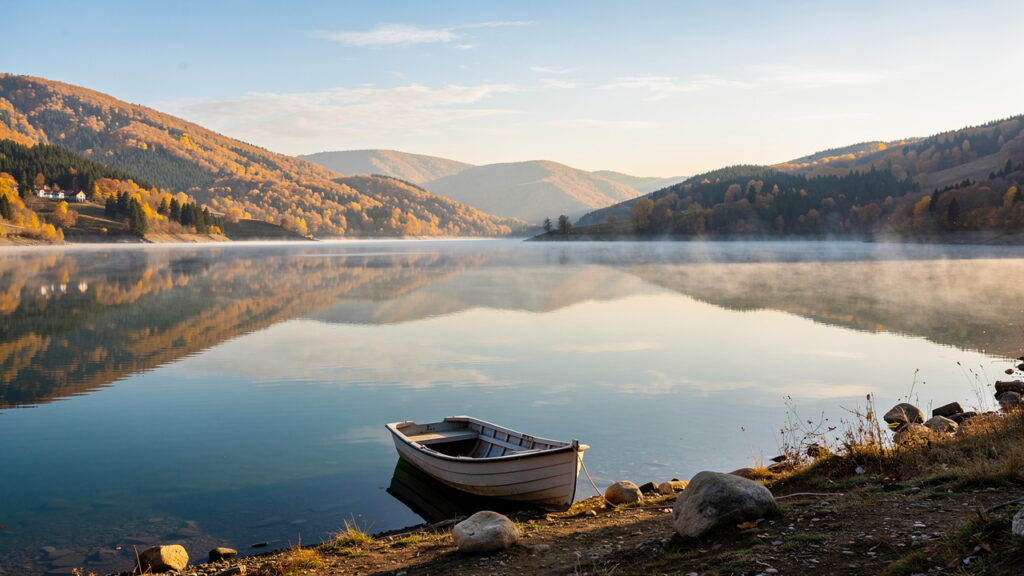
The large reservoirs are the most popular destinations for fishing in Western Bulgaria because they combine easy access with the chance of a trophy catch. Iskar Reservoir, the largest in Bulgaria, is a preferred spot for zander, perch and catfish. The best results, however, are achieved from a boat, as large predators favor the deeper, more remote parts of the reservoir.
The expert approach to fishing at Iskar Reservoir requires studying the underwater terrain. Experienced anglers use fish finders to locate the old riverbed, underwater drops and fallen trees where fish hide. Shore fishing can also be successful, especially around Sturkelovo Gnezdo and the mouth of the Palakaria River, where good bream and crucian carp can be caught.
Main fish species (Iskar): Perch, zander
Best season: Late spring and autumn
Hidden cost: Car access fee in some areas (around €5)
Critical limitation: Windy weather can make boat fishing dangerous
Batak Reservoir, meanwhile, is known for its perch and roach population. Located in the Rhodopes, it offers a more scenic setting. One of its drawbacks is its popularity in summer, which leads to overcrowding at the most convenient fishing spots. For a quieter experience, choose a weekday or the more remote bays in the western part of the reservoir.
What is the best season for fishing on the Struma River?
What types of fish can I catch in the rivers of Western Bulgaria?
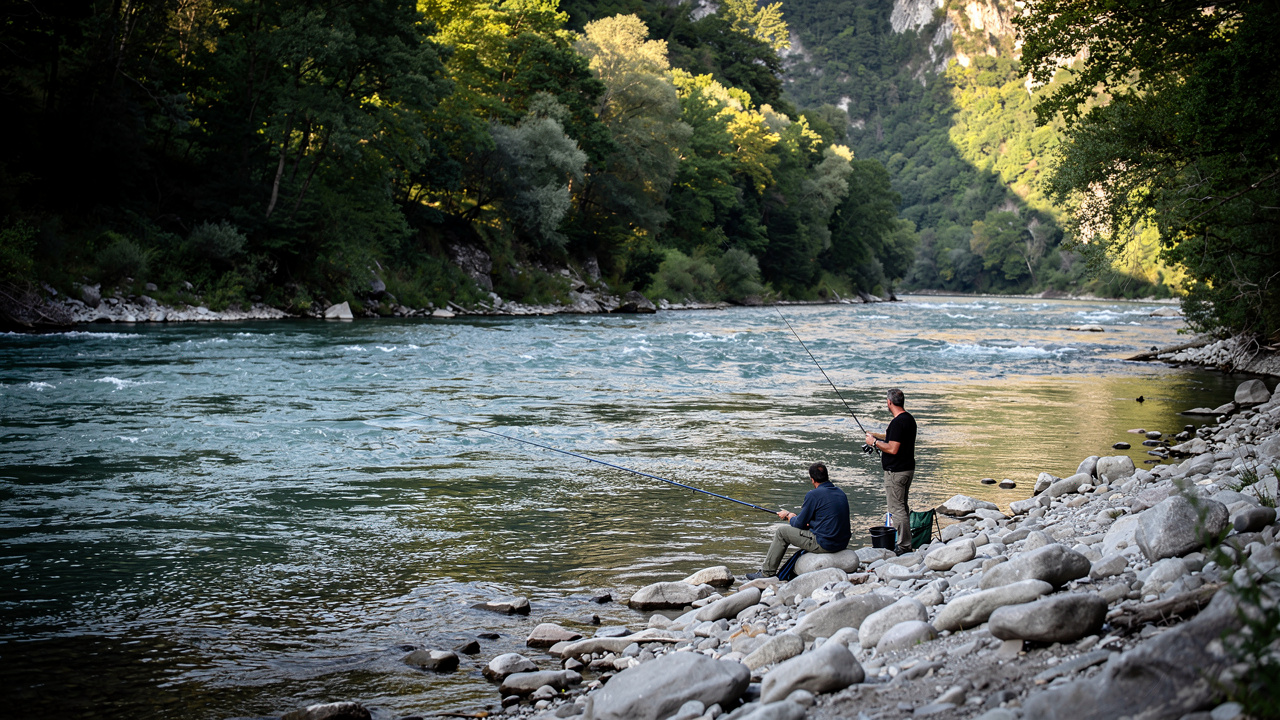
Mountain rivers such as the Struma and Iskar are dominated by trout, chub and barbel. In the lower, slower sections, as well as in the Danube, you will find carp, catfish, pike and zander, offering enormous variety.
Autumn is undoubtedly the strongest season for fishing on the Struma River, especially for anglers targeting large fish. As the water cools slightly, fish become much more active and feed heavily before winter. This is when the largest barbel and chub are often caught, frequently weighing more than a kilogram. Fishing is most successful around the Kresna Gorge and farther downstream toward the Greek border.
For successful autumn barbel fishing, experts recommend bottom fishing with heavier bait such as maggots, caddisfly larvae or even small pieces of cheese. For chub, float fishing with light tackle works best, using grasshoppers or small fruits such as plums and cherries as bait. It is important to approach quietly and carefully, as large fish are extremely wary.
For example, when fishing near the village of Pastukh, where the river forms deep pools, one angler can set one rod on the bottom for barbel while simultaneously working the shallower rapids with another float rod for chub. This combined approach significantly increases the chances of a successful and varied catch.
Hidden spots and paid fishing waters: pros and cons
The biggest mistake when choosing a paid fishing water is trusting the advertising alone. Some heavily promoted locations are either too crowded or the fish in them are “difficult” because of constant fishing pressure. As a result, you pay an entry fee of €15–20 and leave without catching a single fish. Before visiting such a water, look for recent opinions on fishing forums and groups.
Catch guarantee: High, fish are regularly stocked
Typical fee: €10–25 per rod per day
Main drawback: Lack of a true wild-nature experience
Hidden rule: Most waters prohibit keeping large trophy fish
Paid fishing waters are an excellent choice for beginners or family outings. They offer facilities such as parking, restaurants and even equipment rental. Fish are practically guaranteed because carp, grass carp, silver carp and even sturgeon are regularly stocked. This is a controlled environment, ideal for learning the basic techniques.
The truly hidden spots for fishing in Western Bulgaria are the small mountain rivers and minor reservoirs that do not appear in popular guidebooks. Finding them requires studying satellite maps and being prepared to walk. The catch may not be abundant, but the chance to enjoy a Balkan trout or chub in complete solitude is priceless. The practical step here is to open Google Maps, switch to satellite view and follow the small blue lines flowing into larger rivers – often the best spots are hidden there.
What are the most common mistakes beginner anglers make?
One of the most common mistakes is using fishing line that is too heavy. Beginners often choose thick, strong line because they are afraid of losing the “big fish”. In reality, in the clear waters of mountain rivers, thick line is easy to see and scares fish, especially wary species such as chub and trout. Experts use the thinnest line that conditions allow, often with a diameter of 0.12–0.16 mm.
Another serious mistake is incorrect feeding. Many anglers throw huge amounts of groundbait into the water in the hope of attracting fish. This almost always has the opposite effect – the fish quickly become full and lose interest in the bait on the hook. The right approach is to introduce small but regular amounts of groundbait, enough to maintain the fish’s interest without filling them up.
Finally, ignoring local conditions is a sure path to failure. Every body of water has its own specifics – depth, currents and preferred hiding places. Instead of settling at the first convenient spot, spend 15–20 minutes examining the bank. Look for fallen trees, deeper pools below rapids or shaded sections. This is where fish most often hide, and choosing the right spot matters more than any expensive rod.
Frequently Asked Questions
What is the difference between sport and recreational fishing?
The main difference is the purpose and the rules. In recreational fishing, fish are often kept for consumption, subject to legal limits on quantity and size. Sport fishing, especially on paid waters, is almost always practiced on a “catch and release” basis, with the goal being the act of catching rather than keeping the fish. It also uses more fish-friendly methods and hooks.
What are the specifics of fishing on the Bulgarian section of the Danube River?
Fishing on the Danube is challenging because of the river’s scale and strong current. Fishing from a boat is most successful, targeting catfish, carp, zander and asp. Shore fishing is also possible, but requires powerful, long feeder rods to reach deeper sections. Local anglers know specific “holes” and drops where fish gather.
Are there closed fishing periods in Western Bulgaria?
Yes, every year IARA issues an order establishing closed periods for catching certain fish species to ensure their reproduction. The pike ban usually starts earliest, while the spring ban for most species covers April, May and early June. There is also a separate, longer closed period for trout rivers covering autumn and winter. Always check the current order.
What equipment do I need as a beginner?
For a beginner, one versatile rod around 2.70–3.00 meters long, a medium-sized reel and line around 0.20 mm in diameter are enough. Add a small selection of floats, weights, hooks in different sizes and artificial lures such as spinners. Do not forget tools such as hook removers and a landing net. Do not invest in expensive equipment until you know which type of fishing you enjoy most.
Where can I stay for a fishing weekend?
Around major reservoirs such as Batak and Iskar, there are many hotels, guesthouses and bungalows offering accommodation. Many cater specifically to anglers and even offer boats for rent. For fishing on wilder rivers such as the Struma, options include guesthouses in nearby villages. Some paid fishing waters also offer their own bungalows for overnight stays right on the bank.