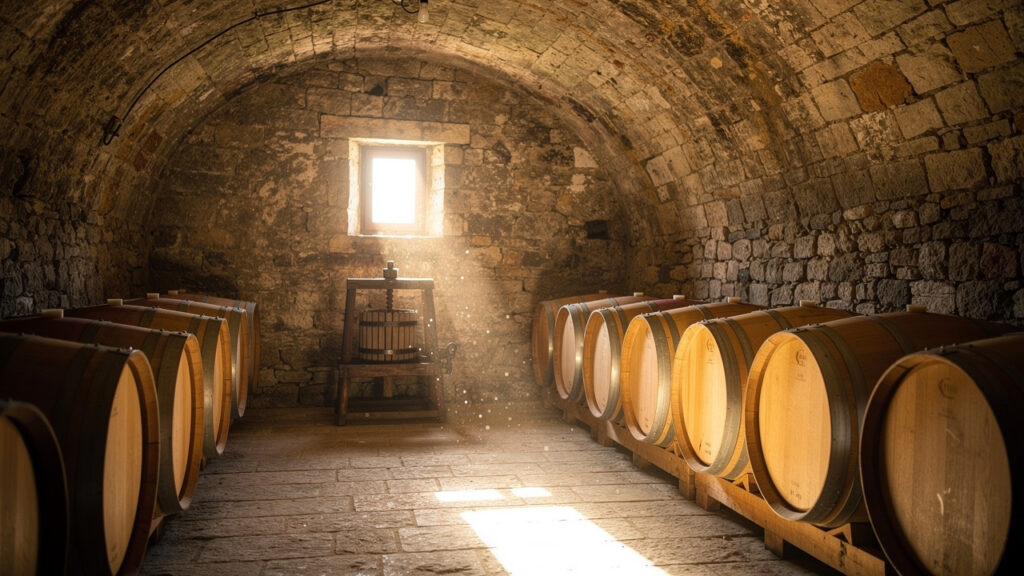
Making red wine involves fermenting grape juice together with the skins, which give the wine its colour and tannins. For beginners, the keys to success are good hygiene, temperature control and quality grapes.
- Red wine must ferment with the solid parts of the grapes—the skins and seeds.
- The biggest risk for beginners is the wine turning to vinegar because of exposure to oxygen and bacteria.
- You don’t need expensive equipment, but a fermentation vessel, a press and a racking hose are essential.
- Racking the wine off the sediment several times is a crucial step in achieving clarity and stability.
- The quality of the finished wine depends about 90% on the quality of the grapes, not on complicated techniques.
“`
Successful home winemaking comes down to three things: excellent hygiene, good-quality grapes with sufficient sugar content, and control over the fermentation temperature. The process isn’t complicated, but it does require patience and attention to detail, especially when racking the wine to separate the clear liquid from the sediment and prevent spoilage.
In Bulgaria, a country with a rich winemaking tradition, making wine at home is more than a hobby—it’s a way to stay connected to your roots. As of 2026, quality grape varieties such as Mavrud, Rubin and Cabernet Sauvignon are easier to find than ever, allowing enthusiasts to achieve results that would have seemed unimaginable a decade ago.
The main difference with red wine is that fermentation takes place with the skins and seeds (the grape pomace), which contribute the colour, aroma and structure. This is what sets the process apart from white winemaking.
What Are the Key Steps in the Process?
HOW IS WINE MADE?
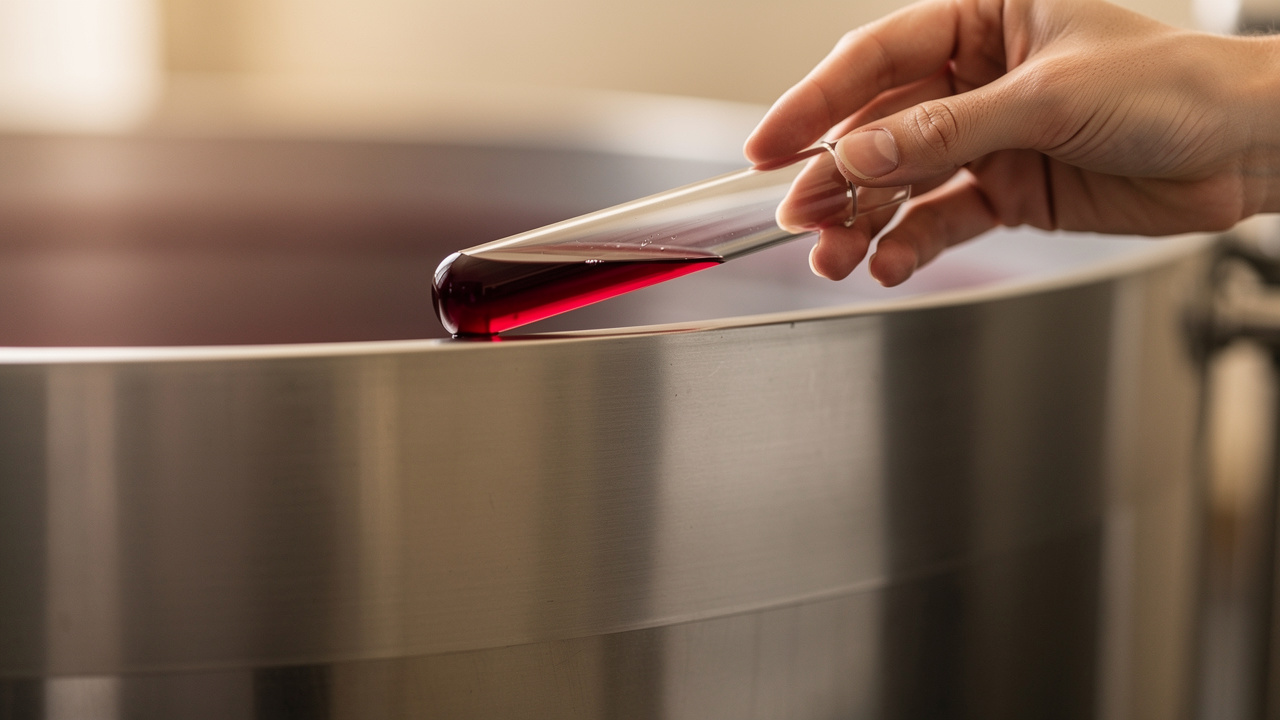
Wine is made by fermenting grape juice, during which yeast converts sugar into alcohol. With red wine, the process also involves leaving the juice in contact with the skins to extract colour and tannins.
Winemaking follows a clear sequence of steps. It starts with crushing the grapes to release the juice. Next comes vigorous alcoholic fermentation in an open vessel, during which the cap of grape skins is stirred regularly. Once fermentation is complete, the mixture is pressed to separate the wine from the solids. Finally, the young wine undergoes a quieter fermentation and is racked several times before it’s ready to drink or age.
Each stage has its purpose. Crushing and destemming—the removal of the stems—prepare the grapes. Fermentation produces the alcohol. Pressing separates the liquid from the solids, while racking helps clarify and stabilise the wine. Skipping a step or getting it wrong can compromise the entire batch.
Choosing and Preparing the Grapes: The Foundation of Good Wine
Which Grapes Are Best for Homemade Red Wine?
The best grapes are fully ripe, healthy and have a sugar content above 22%. Merlot, Cabernet Sauvignon and the local Mavrud variety are excellent choices for beginners because they offer a good balance and predictable results.
Experienced winemakers know that good wine starts in the vineyard. Choose fully ripe grapes—the seeds should be brown rather than green. Always measure the sugar content with a refractometer or hydrometer designed for winemaking. Readings below 20% can be a concern and may mean adding sugar is necessary, which can upset the wine’s balance. Don’t compromise on quality: remove any rotten or mouldy grapes, as they can introduce unpleasant aromas and bacteria.
Once you’ve selected the grapes, they need to be crushed. For small batches, you can do this by hand with clean gloves or by foot in a suitable container. The aim isn’t to crush the seeds, but simply to break the skins. Immediately after crushing, transfer the mixture to a fermentation vessel. A practical rule is to fill the vessel no more than 80% full, leaving room for the cap of grape skins and pulp that rises during fermentation. This is the first step in the actual red winemaking process.
Ideal sugar content: 22–24%
Practical check: The seeds are brown and separate easily from the pulp
Common mistake: Using mouldy or underripe grapes
Critical rule: Never use grapes with visible mould
Fermentation and Pressing: The Heart of Winemaking
Uncontrolled temperatures are one of the quickest ways to ruin fermentation. If the temperature rises above 30°C, the yeast may die prematurely, leaving the wine weak and sweet, or unwanted microorganisms may develop and produce unpleasant smells. The ideal temperature range for red wine fermentation is 22–28°C.
During vigorous fermentation, which lasts between 5 and 10 days, carbon dioxide pushes the skins and seeds to the surface, forming a dense cap. This cap needs to be pushed down and stirred (a process known as punch-down) at least twice a day. This is essential for extracting colour and tannins and for preventing vinegar bacteria from developing on the surface. When vigorous bubbling stops and the cap begins to sink, it’s time to press the grapes.
Pressing separates the liquid into two fractions: free-run wine, which flows out without pressing, and press wine. For home winemaking, the two are often blended. After pressing, transfer the young wine to a vessel for quieter fermentation, made of oak or stainless steel, and seal it with an airlock to keep oxygen out. Malolactic fermentation may also take place at this stage, softening the wine’s acidity and flavour.
How to Handle Aging and Bottling
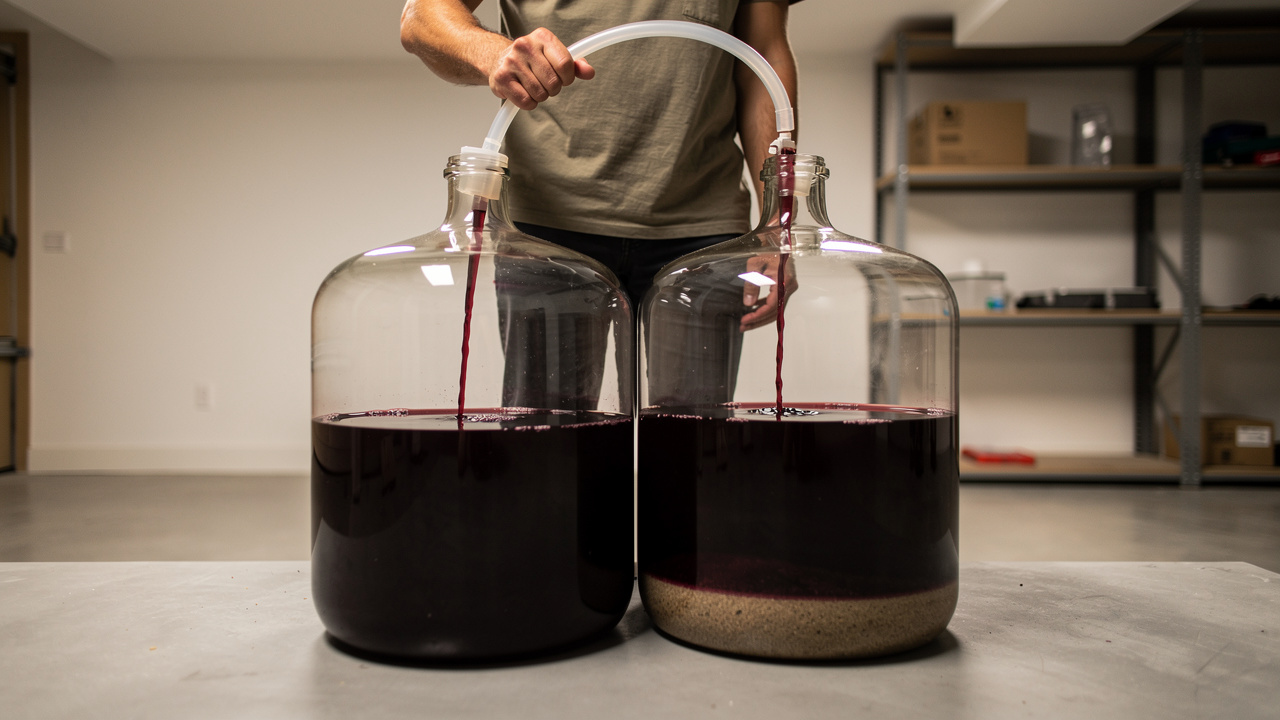
The main task after fermentation is racking. The first racking is usually done around 2–3 weeks after vigorous fermentation ends, separating the young wine from the coarse sediment made up of yeast and grape particles. Use a hose and take care not to draw sediment from the bottom of the vessel. This is an important step in keeping the wine clean and stable as it develops.
Further rackings are usually done every 2–3 months. Each time, the wine gets a little exposure to air, which can help it mature, but careless handling also creates a risk of oxidation. Experienced winemakers recommend racking on cool, calm days to minimise contact with oxygen. As of 2026, many home winemakers also use small amounts of sulphur dioxide (in the form of sulphites) during racking to protect the wine from oxidation and microbes, but beginners need to measure the dosage accurately. Making red wine takes patience from start to finish.
After around 6–12 months of aging and several rackings, the wine is usually clear and ready for bottling. Bottles and corks must be thoroughly clean. Fill the bottles, leaving as little empty space as possible beneath the cork. Store the bottles on their sides so the cork stays moist and doesn’t let air in.
Common Mistakes When Making Red Wine at Home
Why Has My Wine Turned to Vinegar?
Wine turns to vinegar because of acetic acid bacteria (Acetobacter), which convert alcohol into acetic acid when oxygen is present. Vessels that aren’t filled sufficiently and poor hygiene are the main causes.
One of the most common misconceptions among beginners is that adding more sugar will make the wine stronger and better. In reality, too much sugar can stress the yeast and cause fermentation to stop too early, leaving unpleasant residual sweetness and an unstable product. Proper red winemaking starts with the natural sugar content of the grapes.
Poor hygiene is another serious mistake. All vessels, hoses and tools need to be not only washed but also sanitised. Residue from old wine or ordinary dirt can introduce bacteria that spoil the entire batch. Failing to push down the cap regularly during fermentation can also make the wine turn sour.
Mistake No. 1: Poorly cleaned and sanitised equipment
Consequence: Bacterial growth, souring and unpleasant smells
Mistake No. 2: Too much air in the storage vessel
Consequence: Oxidation (the wine turns brown and loses its flavour) or conversion to vinegar
Another common mistake is impatience. Young wine needs time to clear and develop its aromas. Bottling it too soon, before it has stabilised, can lead to sediment in the bottle and a harsh, unfinished taste. Let the wine rest for at least a few months after the final racking.
Frequently Asked Questions
How long does the entire red winemaking process take?
The entire process, from grapes to wine that’s ready to drink, takes at least 3–4 months. Vigorous fermentation lasts about a week, after which the wine needs at least a few months for quieter fermentation and clarification through racking. For better results and more developed flavour, aging for 6–12 months before bottling is recommended.
What equipment does a beginner need?
Essential equipment includes a fermentation vessel (a plastic fermenting bin or wooden vat), a small grape press, a hydrometer to measure sugar content, a racking hose and a storage vessel—such as glass demijohns or a stainless-steel container—with an airlock. There’s no need to invest in expensive equipment at the beginning.
Should I add sugar to the grape must?
Sugar should only be added if the grapes haven’t ripened sufficiently and their sugar content is below 22%. This process is called chaptalisation and must be done carefully to avoid upsetting the wine’s balance. Always measure the sugar content with a hydrometer before deciding. Ideally, no sugar should be needed.
How can I tell when fermentation is finished?
Vigorous fermentation has finished when carbon dioxide bubbles stop rising and the cap of grape skins begins to sink instead of rising. You can also use a hydrometer: when the reading drops close to zero on the appropriate scale, it indicates that nearly all the sugar has been converted into alcohol.
Can I use grapes from a vine growing in my garden?
Yes, but the results may not be ideal. Table grapes grown on garden trellises often have lower sugar content and higher acidity than wine grapes. For the best results, use dedicated wine grape varieties such as Merlot, Cabernet Sauvignon or Mavrud.
What’s the difference between the first and second fermentation?
The first, or alcoholic, fermentation is the vigorous process in which yeast converts sugar into alcohol. The second is called malolactic fermentation. It usually takes place after alcoholic fermentation and involves bacteria converting sharp malic acid into softer lactic acid. This helps give red wine its smoother, more rounded flavour.
“`