Modern pickle recipes are contemporary takes on classic winter preserves, using unusual ingredients, less salt and techniques such as quick pickling or lactic acid fermentation. They offer a wider range of flavours, often with added health benefits.
- Fermented pickles require a precise salt-to-water ratio to prevent harmful bacteria from developing.
- Asian spices such as ginger, turmeric and star anise give traditional vegetables an exotic flavour.
- Quick pickles are ready to eat within 24–48 hours, but have a much shorter shelf life in the fridge.
- Adding fruit such as apples or quinces to savoury pickles creates a unique sweet-and-sour balance.
- Good-quality apple cider or rice vinegar is preferred in modern recipes to standard wine vinegar for a milder flavour.
Today’s approach to preserving food is shifting away from simply keeping produce for the winter and towards creating more complex, healthier flavours. Modern pickle recipes draw on fermentation, exotic spices and less familiar vegetables, turning each jar into a culinary experiment rather than just a way to stock up on food.
In Bulgaria, where pickles are part of the country’s culinary DNA, these trends have found fertile ground. By 2026, more and more households are experimenting with techniques inspired by Korean kimchi and Scandinavian quick pickles. The result is a crunchier, less salty and often probiotic-rich preserve.
The main change is in the understanding that preserving food can improve a product, not just keep it from spoiling. Instead of heavy vinegar marinades that kill everything off, the aim is to create a controlled process that develops both flavour and nutritional value.
| Feature | Quick pickles | Lacto-fermented | Asian-style (spicy) |
|---|---|---|---|
| Preparation time | 1–2 hours + 24 hours to chill | 1 hour + 7–21 days for fermentation | 2–3 hours + 48 hours to chill |
| Shelf life | 2–4 weeks (refrigerated) | 6+ months (in a cool place) | 1–2 months (refrigerated) |
| Main ingredients | Vinegar, water, sugar, spices | Water, salt, vegetables | Rice vinegar, soy sauce, chilli |
| Risk of spoilage | Low, if stored properly | Moderate (requires good hygiene and monitoring) | Low to moderate |
New stars in the jar: Unusual ingredients and combinations
What unusual vegetables can I use for pickling?
Alongside the classics, try asparagus, green beans, radishes, fennel or even young courgettes. They stay crunchy and absorb the flavours of the brine or marinade beautifully, creating something completely different.
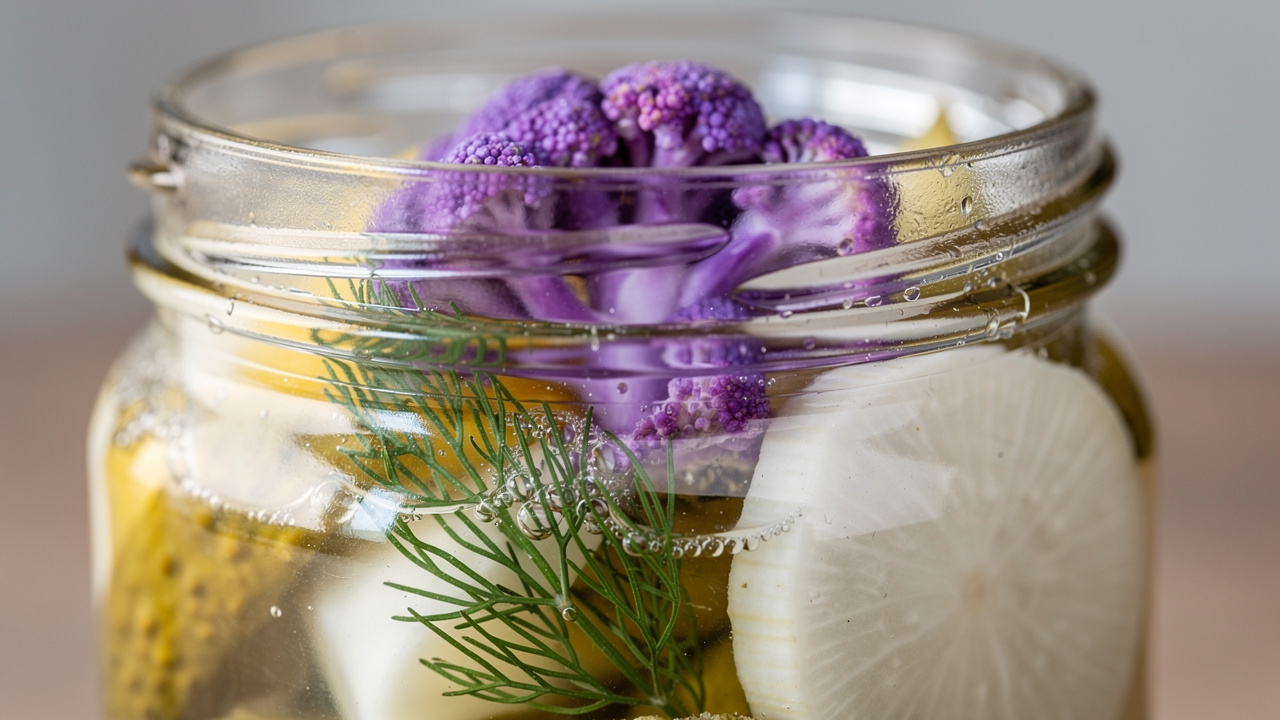
Think beyond just peppers and carrots. Modern pickle recipes make use of ingredients we rarely associate with winter preserves. Green tomatoes, daikon radishes, chunks of pumpkin and even colourful broccoli florets can all be turned into gourmet pickles. Texture is key: choose vegetables that stay firm and crunchy after processing.
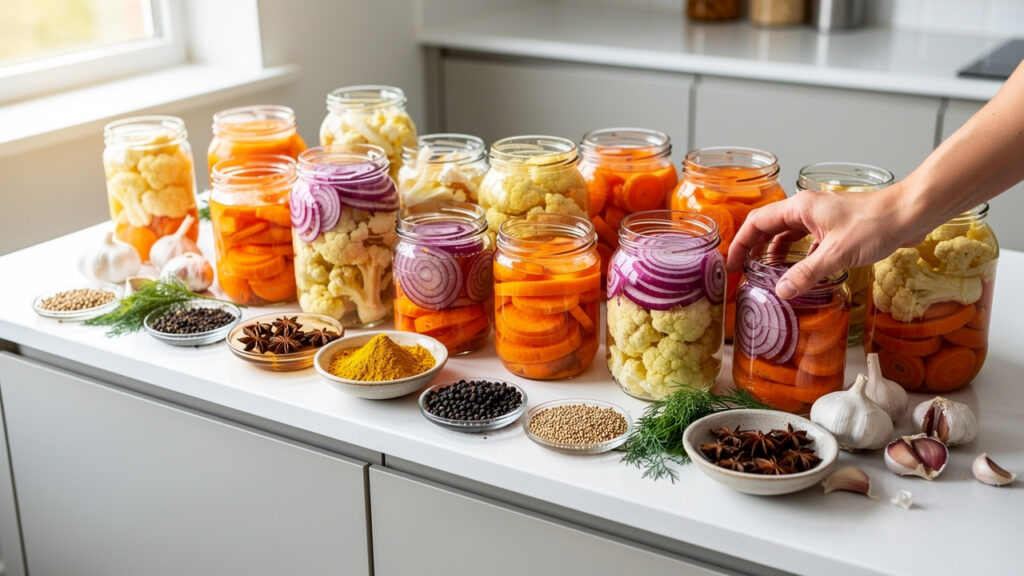
The combinations are just as adventurous. Apples and carrots with ginger, cauliflower with turmeric and cumin, or beetroot with star anise and cinnamon are just a few possibilities. These pairings do more than add flavour; they turn pickles from a side dish into a centrepiece in their own right.
One example of this approach is cherry tomato pickles with basil and garlic in a light brine. Instead of a heavy vinegar marinade, all you need is salt, water and aromatics, allowing the tomatoes’ natural sweetness to come through. It is a good example of aiming for balance rather than letting the sourness dominate.
Techniques beyond tradition: Fermentation and quick pickles
What’s the difference between quick pickles and fermented pickles?
Quick pickles use vinegar as a preservative and are ready within days, but do not keep for long. Fermented pickles rely on salt and lactic acid bacteria. The process takes longer, but the result keeps well and contains probiotics.
Most people associate pickles with vinegar and sugar, but modern methods often leave both out. Lacto-fermentation is an old technique that has made a comeback. Vegetables are submerged in a salt solution (brine) and left to ferment. Beneficial lactic acid bacteria convert the sugars in the vegetables into lactic acid, which acts as a natural preservative. The result is a probiotic-rich product with a complex, slightly tangy flavour.
At the other end of the spectrum are quick pickles, also known as ‘refrigerator pickles’. They are not meant for long-term storage. The vegetables are covered with a hot marinade made from vinegar, water, sugar or honey, and spices, then left in the fridge. They are ready to eat the next day and retain their freshness and crunch, but should be eaten within a few weeks.
Fermentation process: The natural growth of lactic acid bacteria
Main preservative: Lactic acid and salt
Health benefit: A rich source of probiotics
Critical factor: Maintaining the correct salt concentration (2–3%)
The practical choice here is to select the method that suits your goal. For a quick, crunchy addition to a weekend salad, go with a quick pickle. For long-lasting, probiotic-rich preserves, take the time to lacto-ferment your vegetables.
What are the most common mistakes when making modern pickles?
Can you make pickles without sugar and vinegar?
Yes. That is the essence of lacto-fermentation. The process uses only salt and water to create an environment in which beneficial bacteria preserve the vegetables and give them their characteristic sour taste.
The surest way to ruin a batch of fermented vegetables is to use too little salt. Salt is not just there for flavour. It creates an environment where harmful bacteria cannot thrive, while beneficial lactobacilli multiply. As a general rule, use 2–3% salt based on the combined weight of the water and vegetables. Iodised salt is also best avoided, as iodine can interfere with fermentation.
Another common mistake is letting the vegetables float above the surface of the brine. Any part exposed to air is vulnerable to mould. Experienced fermenters use weights – glass, ceramic or purpose-made ones – to keep everything submerged. This is the most important step in achieving a clean fermentation.
With quick pickles, the problem often comes down to the marinade proportions. Too much vinegar makes them harshly sour, while too little leaves them bland and more prone to spoiling. A good starting ratio is one part vinegar to one part water, which you can adjust to taste. Skimping on good-quality vinegar, such as apple cider or rice vinegar, can also affect the final result.
The cost of experimentation: Budgeting for modern preserves
Making modern pickles is not necessarily more expensive than making traditional ones, but it does call for an initial investment in good-quality spices and, sometimes, more specialised ingredients. Traditional Bulgarian mixed pickles use affordable vegetables, while experimenting with fennel, asparagus or exotic spices can push up the initial cost. A single jar can cost anywhere from €2–3 to more than €10.
The biggest difference in price comes from the ingredients beyond the basic vegetables. Good-quality apple cider vinegar, Himalayan or sea salt, fresh ginger, turmeric and star anise all cost more than standard wine vinegar and table salt. Still, you only use small amounts, so one purchase can go a long way across several jars.
Basic budget (1-litre jar): Around €3–5
Gourmet version (with exotic ingredients): Around €8–12
Main cost driver: Unusual spices and vegetables
Long-term savings: Less food wasted when the method is followed correctly
One way to keep costs under control is to buy seasonal vegetables when they are at their cheapest. Spending a little more on better spices pays off in the final result, which is the whole point of these modern pickle recipes.
The health aspect: Less salt, more benefits?
Experienced cooks reduce the amount of salt by relying on natural fermentation and spices for preservation and flavour. Current dietary trends favour lower sodium intake, and this affects how people prepare their winter preserves, too. Although lacto-fermentation does use salt, the finished product often has a more balanced salty flavour than traditional pickles sitting in a very salty brine.
The main health benefit of fermented foods is their probiotics. These live microorganisms support gut health, which is linked to better digestion and a stronger immune system. It is worth noting that pasteurisation (heating), used for some commercially produced pickles, kills these beneficial bacteria.
With quick pickles, you are in control. You can cut back significantly on the sugar or replace it with honey or maple syrup. Using milder vinegars, such as apple cider or rice vinegar, also gives a more pleasant, less harsh flavour. The result is closer to a fresh salad than to a heavy winter preserve. Modern pickle recipes available in 2026 show that healthy and tasty can go hand in hand.
Frequently Asked Questions
How long do quick pickles last?
Quick pickles, also known as refrigerator pickles, have a much shorter shelf life than fermented ones. Since they are marinated rather than preserved through a fermentation process, they need to be kept in the fridge and eaten within 2 to 4 weeks. After that, they start to lose their crunch and flavour.
Which spices work well in modern pickles?
Alongside traditional dill, garlic and black pepper, modern recipes use more exotic flavours. Ginger, turmeric, star anise, mustard seeds, coriander and even hot peppers such as jalapeños are all excellent choices. These spices add not only flavour but also colour, making each jar a little culinary creation of its own.
Why have my fermented pickles gone soft?
The most common reasons for soft fermented vegetables are too little salt, a fermentation temperature that is too high, or starting with old, soft vegetables. Salt draws out moisture and helps preserve crunch. The ideal temperature is around 18–22°C. Always start with the freshest, firmest produce you can find.
Can I use ordinary table salt for fermentation?
Technically, yes, but it is not recommended. Ordinary table salt often contains iodine and anti-caking agents, which can interfere with fermentation and make the brine cloudy. For the best results, use pure sea salt, Himalayan salt or additive-free pickling salt.
How do I know when fermented pickles are ready?
It depends on the temperature and your personal taste. The process usually takes 7 to 21 days. You can start tasting the pickles after the first week. They are ready when they have a pleasant, slightly sour flavour and are still crunchy. The brine should be cloudy, and you may notice a little fizz when you open the jar – that’s a good sign.