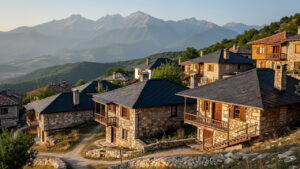
Aitos is a town in southeastern Bulgaria with an ancient history and key attractions such as the Genger Ethnographic Complex and the Three Brothers rock formations. A visit combines cultural heritage with natural scenery.
- The Genger Ethnographic Complex is best visited during a folklore festival for the full experience.
- Reaching the Three Brothers rock formations requires suitable footwear and is not recommended after heavy rain.
- The town’s history dates back to the 5th century BC, and archaeological finds are preserved in the local history museum.
- Plan at least one full day to explore Aitos’s main attractions without rushing.
- Slaveeva Reka Park offers easy walking paths, but it gets crowded on spring weekends.
Aitos offers much more than a stop on the way to the seaside. The key to making the most of your visit is to combine cultural sites with natural landmarks in a single day. Start with the more remote rock formations in the cool of the morning, then finish the afternoon in the shade of the ethnographic complex. That’s the practical foundation of a good trip here.
For Bulgarian travelers in 2026, the town is an authentic corner of the country that has preserved its local character, far from the excessive commercialization of the major resorts. The fact that the main Sofia–Burgas road passes through it makes Aitos easy to reach, yet most people simply drive past. That’s precisely what keeps it a destination for those who appreciate places like this.
The town is more than a collection of attractions. It’s a living place where history, nature and modern life intertwine. Understanding that connection is at the heart of any visit that aims to leave a lasting impression.
| Feature | Historical Sites (Museum, Fortress) | Natural Attractions (Rock Formations, Park) | Cultural Experiences (Genger, Festivals) |
|---|---|---|---|
| Accessibility | Central town area, easy access | A car is needed, with short walks | Within walking distance in town |
| Best Season | Year-round | Spring and autumn | Spring and summer |
| Time Required | 1–2 hours | 2–3 hours | 2–4 hours |
| Typical Cost | Minimal (admission fees) | None (free access) | Moderate (souvenirs, food) |

What is the ancient history of Aitos and its surrounding lands?
How long has Aitos existed?
Archaeological evidence suggests that the area around present-day Aitos was inhabited as early as the 5th century BC. The town has an ancient history linked to the Thracians, the Romans and the medieval Bulgarian state.
The history of Aitos began long before the Bulgarian state was founded. According to information from the regional administration, the earliest traces of human settlement in the area date back to the 5th century BC and were left by Thracian tribes. The region later became part of the Roman Empire, and its strategic location turned it into an important defensive stronghold.
The town’s name, Aetos (from the Greek αετός, meaning “eagle”), is linked to a legend about the protection of this powerful bird. During the Middle Ages, the Aetos Fortress was built here as part of the First Bulgarian Empire’s defensive system against Byzantine invasions. The ruins of the fortress can still be seen today, standing as a silent reminder of the region’s turbulent past.
Today, artifacts from these periods are preserved in the Town History Museum. A visit is a must for anyone who wants to understand the layers of history on which the modern town was built. The exhibition features finds from prehistory, antiquity and the Middle Ages, providing context for everything you will see beyond its walls.
Genger Ethnographic Complex: The City’s Living Tradition
What is the Genger Complex?
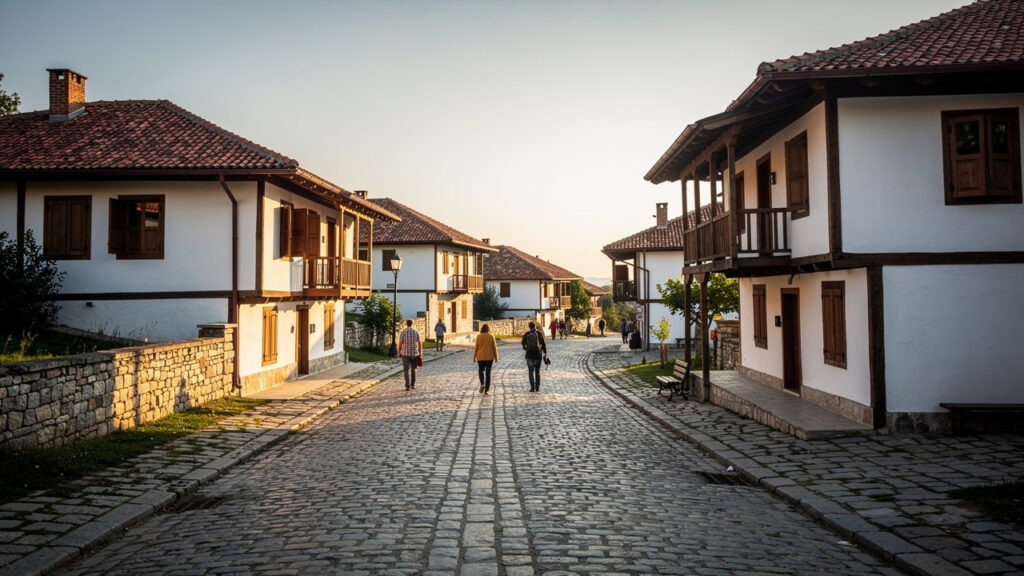
The Genger Architectural and Ethnographic Complex recreates a commercial street from the 19th century. It includes craft workshops, a café and an art gallery showcasing Aitos’s traditional Revival-era lifestyle and culture.
The best way to get a feel for the spirit of Aitos is to visit Genger in the late afternoon, when the heat has eased and people begin to fill the cobbled streets. Rather than simply looking around, sit down in the traditional café and try coffee brewed in hot sand. It’s an experience in its own right, not just another stop on a sightseeing tour. The complex is officially recognized as a tourist attraction, as listed in the Register of Tourist Attractions.
The complex itself recreates a traditional craft market street from Bulgaria’s National Revival period. Here you’ll find working workshops run by a potter, a coppersmith and a weaver. You can watch them at work and buy unique, handmade items. This is a place where history feels alive and accessible.
A common mistake is to think of Genger simply as an open-air museum. The complex is at the heart of the town’s cultural life, especially during the traditional Aitos Cultural Festivals. If you plan your visit around these events, you’ll see folk performances, demonstrations and fairs that turn the place into a real feast for the senses. Check the municipality’s program in advance.
Type of Attraction: Architectural and ethnographic complex
Main Attractions: Craft workshops, gallery, café
Common Mistake: Visiting at midday in summer, when it’s too hot
Opening Hours: Workshops often have their own schedules, so check in advance
Natural Landmarks: The Three Brothers, Rock Niches and Slaveeva Reka Park
What are the best-known rock formations near Aitos?
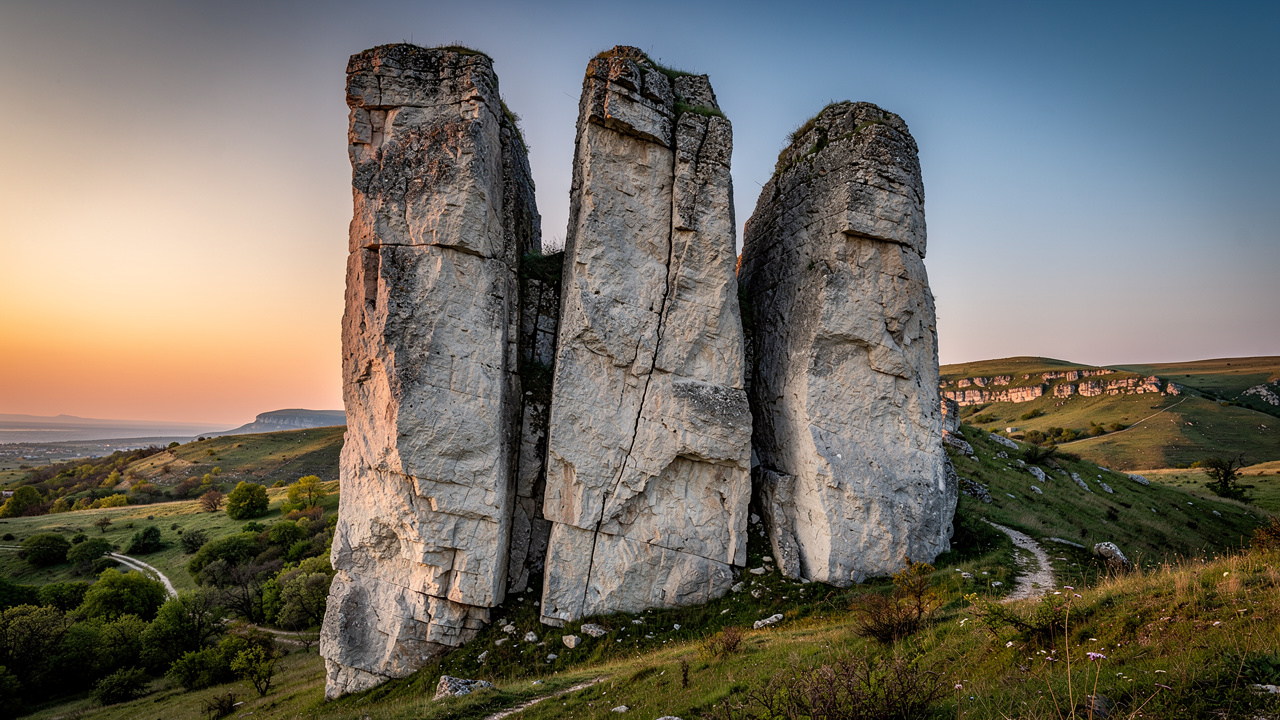
The best-known formations are the Three Brothers, a group of three imposing rocks. They are a symbol of the town and a popular destination for tourists and climbers, offering beautiful views over the Aitos Plain.
The main mistake people make when visiting the natural attractions around Aitos is underestimating the terrain. Trying to reach the rock formations in unsuitable footwear or immediately after rain can turn a pleasant walk into an unpleasant challenge. The paths can be slippery and muddy.
The area’s most iconic natural landmark is the Three Brothers rock formation, which rises above the town. You can drive almost to its base, from where a short but steep walk follows. The reward is a panoramic view over the entire Aitos Plain. Experienced photographers know that the best shots come at sunrise or sunset, when the low-angle light brings out the contours of the rocks.
Besides the Three Brothers, the area is rich in other rock formations and Thracian rock niches. For a more relaxed walk in nature, Slaveeva Reka Park is the ideal choice. Located within the town itself, it offers shaded paths, a lake with boats and a zoo. This makes it a great spot for families with children, especially during the warmer months of 2026.
Main Natural Landmark: The Three Brothers rock formation
Additional Attraction: Slaveeva Reka Park with its zoo
Risks When Visiting: Slippery paths after rain; unsuitable footwear
Access Requirements: A moderate level of fitness is needed to reach the rocks
How to Plan Your Visit to Avoid Mistakes
Many people see Aitos as a place to spend a few hours on the way to Burgas. This is the biggest misconception and a major planning mistake. To get a real feel for the town, you need at least 6–8 hours, divided sensibly between its natural and cultural attractions.
A practical one-day itinerary looks like this: start with the rock formations in the morning, while it’s still cool and there are fewer people around. Then return to town for lunch and a visit to the history museum. Leave the afternoon for a walk through the Genger Ethnographic Complex and Slaveeva Reka Park, where you can escape the heat.
One expense many visitors overlook is the cost of souvenirs and local products. The handmade items at Genger are unique and tempting, while the local wines and honey are excellent. Set aside a small budget for these purchases so you won’t be disappointed. It’s a way to support local producers and take a little of Aitos home with you.
For the best experience, check for local events in advance. The town hosts folklore festivals such as Slaveevi Noshti (Nightingale Nights) and horse races on Todorovden, which can turn an ordinary visit into a lasting memory. A quick check of the municipality’s website is what sets a traveler apart from someone who simply passes through.
Frequently Asked Questions
What should you know about Aitos Municipality?
Aitos Municipality is located in southeastern Bulgaria, in Burgas Province. In addition to the town of Aitos, it includes 16 villages. The area is known for its well-developed agriculture, deposits of non-metallic minerals and rich cultural and historical heritage. Important transport corridors connecting southern and northern Bulgaria cross its territory.
What is the best time of year to visit Aitos?
The best time to visit Aitos is in spring (April–May) and autumn (September–October). Temperatures are moderate during these months, making them ideal for walks to the natural attractions. Summers can be very hot, while winters are quieter but not suitable for hiking in the surrounding hills.
How much time do you need to see the main attractions?
To explore the main attractions at a relaxed pace, including the Genger Complex, the history museum, Slaveeva Reka Park and the Three Brothers rock formation, it’s best to set aside one full day. If you only have half a day, focus on the attractions within the town itself: Genger and the park.
Are there good places to eat at the Genger Ethnographic Complex?
Yes, there are several restaurants and cafés in and around the Genger Complex serving traditional Bulgarian cuisine in an authentic setting. You can try local specialties. The complex also has an iconic café where coffee brewed in hot sand is served.
Is it safe to visit the natural attractions on your own?
Yes, visiting natural attractions such as the Three Brothers is safe if you follow basic precautions. The paths are relatively well marked, but suitable hiking shoes are essential. Avoid visiting in bad weather, especially after rain, when the rocks and paths become slippery.
What is Slaveeva Reka Park?
Slaveeva Reka Park is a large urban park in Aitos, built along the river of the same name. It has a zoo, a lake with pedal boats, children’s playgrounds and plenty of walking paths. It’s a popular place for both locals and visitors to relax, especially families with children.