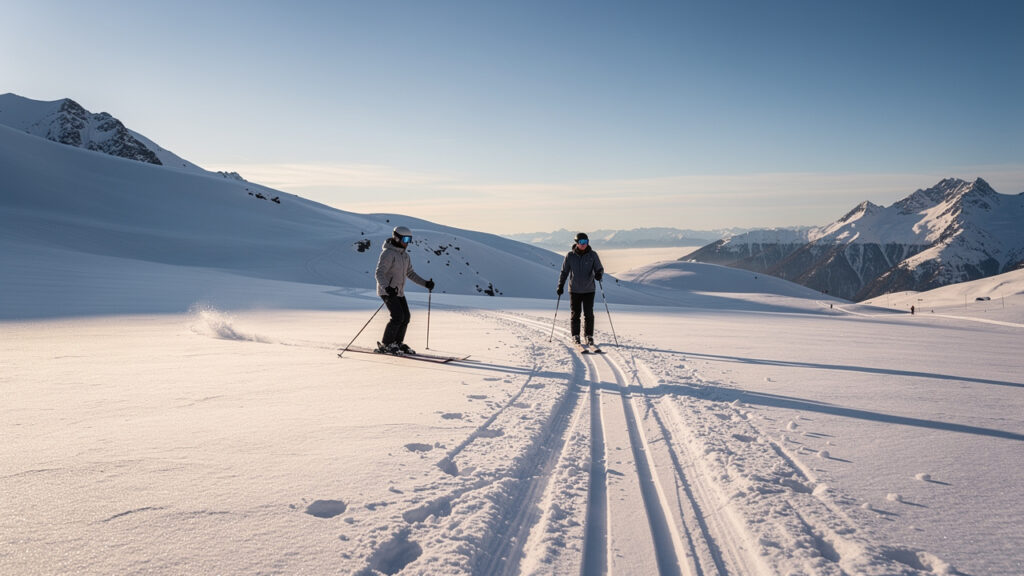
Skiing off-piste in Bulgaria takes place outside designated areas and is not specifically regulated. If an accident occurs, rescue costs are the responsibility of the injured person unless they have taken out specific mountain insurance.
- There is no legal regulation in Bulgaria that officially designates freeride routes outside the resorts.
- Standard ski insurance included with a lift pass usually does not cover accidents outside marked pistes.
- Rescue operations off-piste can cost several thousand euros, which you may have to pay yourself.
- Essential equipment includes an avalanche transceiver, probe and shovel, and you must know how to use them.
- Always tell someone your planned route and expected return time before setting off.
The main risk of skiing off-piste is not just an avalanche, but also the financial responsibility that comes with an accident. Rescue operations outside marked areas are paid for entirely by the injured person. The cost can easily run into thousands of euros if the operation requires more complex logistics or a larger rescue team.
This practice remains popular in Bulgaria, even though, as of 2026, there is still no clear legal framework for so-called freeride zones. This leaves those who take part in the sport in a grey area, where personal judgement and preparation are their only safety net. Insurance is essential, but only if it explicitly covers search and rescue.
The reality is that the freedom of untouched snow comes with full personal responsibility. Understanding the rules, risks and financial consequences is essential before you even consider making your first descent beyond the groomed pistes.
| Aspect | On a marked piste | Outside a marked piste (freeride) |
|---|---|---|
| Legal status | Regulated, with clear rules for use | Unregulated, a “grey area” |
| Responsibility in the event of an accident | Shared (resort operator, Mountain Rescue Service, individual) | Entirely personal |
| Rescue costs | Usually covered by the insurance included with the lift pass | Paid personally (potentially thousands of euros) |
| Required equipment | Standard (helmet, skis/snowboard) | Specialised (avalanche transceiver, probe, shovel) |
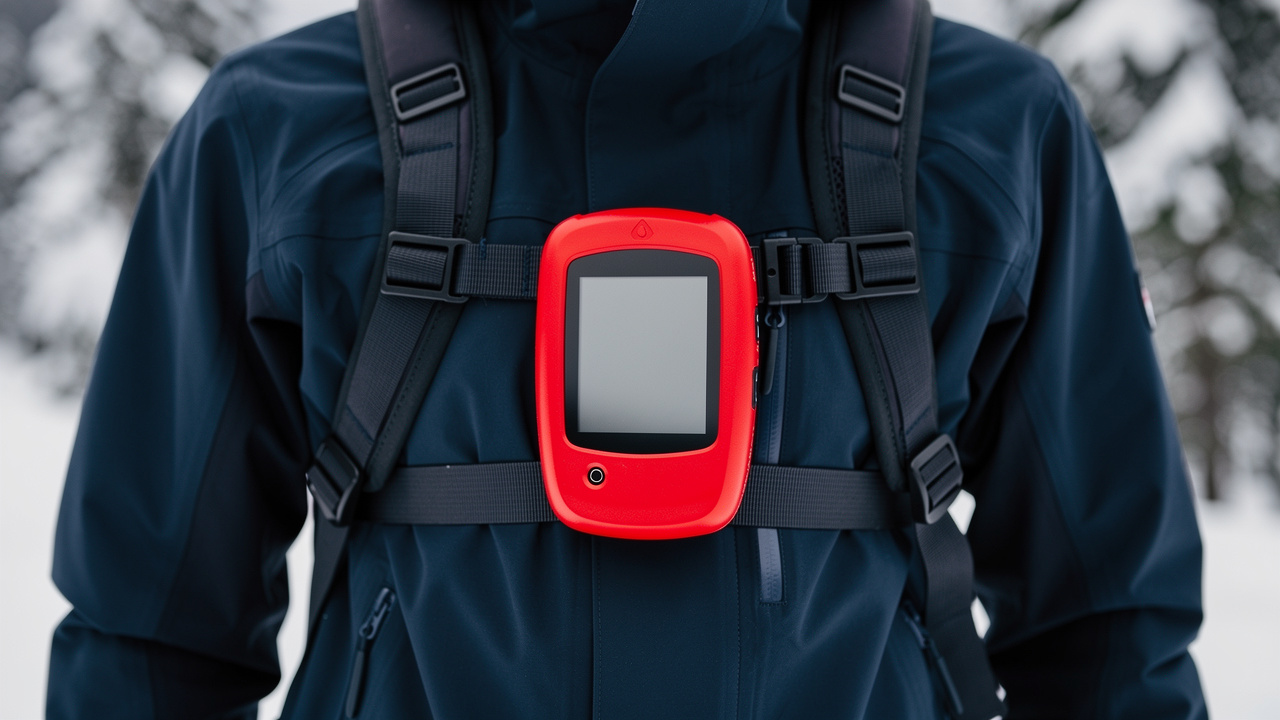
Marked pistes vs. freeride zones: What’s the difference?
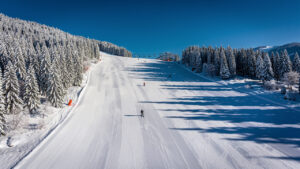
A marked ski piste is a groomed and secured area for which the resort operator is responsible. Its boundaries are clearly marked, avalanche danger is managed, and the Mountain Rescue Service (MRS) patrols the area and provides assistance, which is usually covered by the insurance included with the lift pass.
Skiing off-piste, also known as freeriding or backcountry skiing, takes place on ungroomed, wild terrain. There are no piste markers, no avalanche control and no patrols. Every descent is entirely at your own risk, and responsibility for assessing the conditions, choosing the route and judging your own abilities rests solely with you.
Type of terrain: Groomed and patrolled (piste) vs. wild and uncontrolled (off-piste)
Avalanche control: Yes (piste) vs. No (off-piste)
Main risk: Collision with other people (piste) vs. natural hazards (off-piste)
Access to help: Fast and organised (piste) vs. delayed and costly (off-piste)
The difference is about more than the snow. It comes down to an entirely different mindset and level of preparation. While a piste offers a relatively safe environment for recreation, freeriding requires expert knowledge of the mountains, avalanche safety and survival skills.
Legal framework and rules for skiing off-piste in Bulgaria
Is skiing outside marked pistes legal in Bulgaria?
It is not explicitly prohibited, but it is entirely unregulated. There is no legal framework defining zones or rules, which means you ski at your own risk and responsibility outside the resorts’ protected areas.
Contrary to popular belief, Bulgaria has no officially “permitted” zones for skiing outside marked pistes. The Tourism Act and its related regulations govern safety and order only within ski areas and on marked pistes. Article 157, paragraph 1 of the Tourism Act requires piste owners to ensure their safety, but that responsibility ends where the boundary nets and signs end.
Anyone who ventures beyond those boundaries enters an area for which neither the state nor the resort operator accepts responsibility. In practice, this is not illegal, but it is an activity in a legal grey area. If an accident occurs, you cannot hold the resort responsible for a lack of safety measures or piste markings.
A typical scenario is a group following tracks just beyond the piste and ending up in a gully filled with accumulated snow. If one of them falls and gets injured, calling the Mountain Rescue Service will set a rescue operation in motion, and the injured person will receive the bill. This is the key difference that many people overlook.
Who pays for a rescue operation in the event of an accident?
Who pays if a rescue operation is needed off-piste?
The injured person is responsible for the full cost unless they have specific mountain insurance that explicitly covers “search and rescue”. Standard insurance included with lift passes does not apply outside marked areas.
The biggest financial shock for powder enthusiasts comes when a rescue is needed. If an accident happens on a marked piste, the costs are covered by the insurance included with the lift pass. But once you go even a metre beyond the piste markers, you are in the backcountry and the rules change dramatically.
The Mountain Rescue Service (MRS) is required to respond to every emergency call, but its services outside ski areas are charged according to an established price list. The cost is calculated based on the number of rescuers involved, the equipment used (including snowmobiles or specialised gear) and the duration of the operation. Charges can range from a few hundred to more than €5,000.
Basic rate: Calculated per rescuer per person-hour
Additional costs: Transport, equipment and consumables
Typical cost (straightforward operation): Around €300–800
Cost when complications arise: Can exceed €5,000
The solution is to take out adequate mountain insurance. It is the only way to protect yourself against potentially crippling expenses. Make sure the policy covers not only medical costs, but also explicitly includes “search and rescue”.
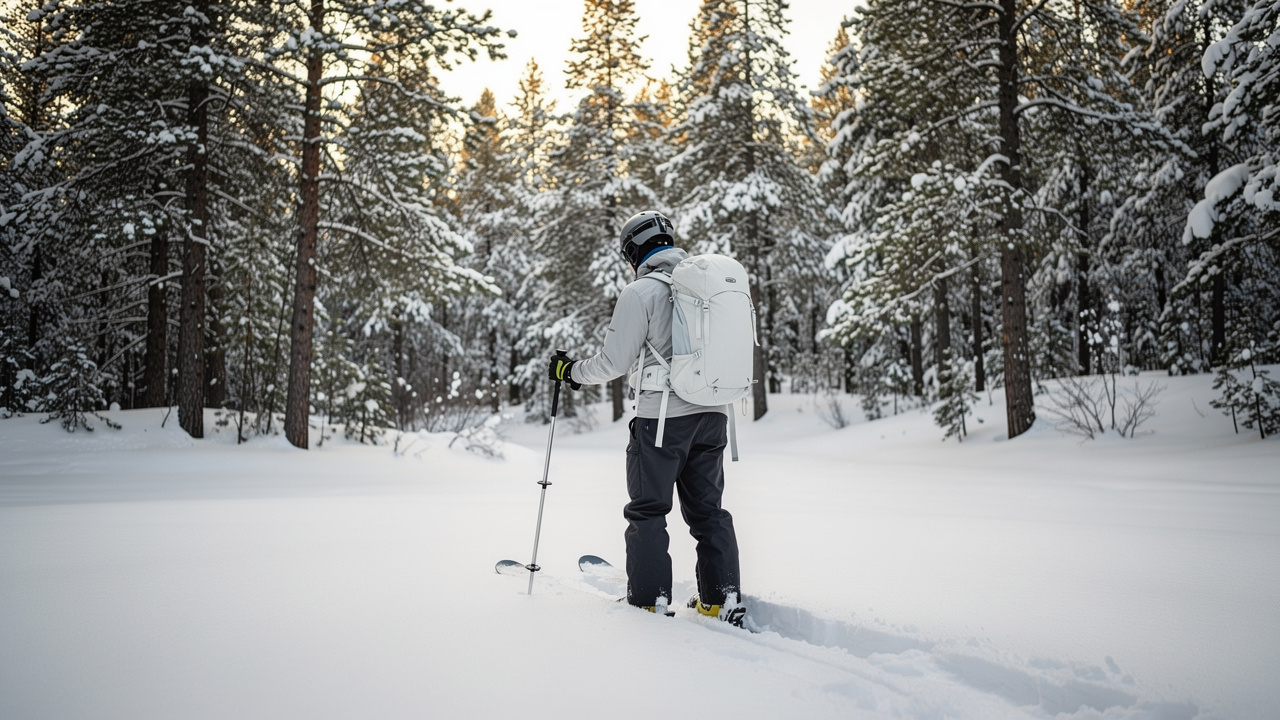
Essential safety equipment for skiing off-piste
What is the most important part of avalanche safety equipment?
The most important thing is the combination of three devices: an avalanche transceiver, a probe and a shovel. Each one is useless without the other two, and all three are ineffective unless you know how to use them quickly and properly in a real emergency.
Experienced freeriders never underestimate their equipment. Before every outing, they check the avalanche transceiver’s battery and test compatibility with the devices carried by the rest of the group. This is not just a routine; it is a life-saving procedure.
The minimum essential kit for skiing off-piste is what is known as the “holy trinity” of avalanche safety. Every member of the group must carry and know how to use:
- Avalanche transceiver (beacon): An electronic device that can both transmit and receive a signal, allowing someone buried under the snow to be located.
- Probe: A collapsible pole, 2–3 metres long, used to probe the snow and pinpoint the person after they have been located with the transceiver.
- Shovel: A sturdy metal shovel for digging through the snow. Time is critical, and plastic shovels are useless against hard, compacted snow.
This basic kit should be supplemented with a helmet, a backpack with an airbag system (strongly recommended), a first-aid kit and a mobile phone with a fully charged battery. You should also take an avalanche safety course. Equipment is useless if you do not know how to use it under pressure.
How to choose the right mountain insurance
The first step when choosing insurance is to check whether it covers “search and rescue”. Many standard travel policies cover only medical expenses after an accident, not the rescue operation itself, which can account for the largest costs. Look for this wording in the policy’s terms and conditions.
The next step is to check the coverage limit. For rescue operations in Bulgaria, a limit of €10,000 is generally sufficient as of 2026, but if you plan to ski in the Alps, look for coverage of at least €30,000. Also check whether the policy covers helicopter rescue, as this is the most expensive part of an operation.
If you find an exclusion for “extreme sports”, be very careful. Most insurers classify any skiing off-piste as an extreme sport. Make sure your activity is not covered by an exclusion, or pay extra for an extension that explicitly includes it.
Always carry the assistance company’s phone number provided by your insurer. In the event of an accident, call them first, then dial 112 or contact the Mountain Rescue Service directly. The assistance company will coordinate the rescue and arrange payment, saving you from administrative complications at a critical moment.
Frequently asked questions
What are the main safety rules for overtaking on a ski piste?
The basic rule is that the skier coming from behind or from above is responsible. They must choose a route and speed that do not put the skiers ahead of them in danger. Always leave enough room when overtaking and avoid sudden manoeuvres. Before stopping or joining the flow of skiers, look uphill to make sure it is safe.
Does the European Health Insurance Card cover mountain rescue operations?
No. The European Health Insurance Card (EHIC) does not cover search and rescue costs in the mountains. It gives you access to emergency medical treatment in state hospitals in EU countries under the same conditions as local residents, but the rescue operation itself remains your responsibility. This is why separate mountain insurance is essential.
What is “avalanche terrain” and how can I recognise it?
Avalanche terrain is any slope with an angle of more than 25–30 degrees that is open enough for a large mass of snow to accumulate and slide. It can be recognised by the absence of dense forest, the presence of gullies and snowdrifts, and visible signs of previous avalanches. Even if you are below such a slope rather than on it, you may still be in the danger zone. Taking an avalanche safety course is the best way to learn how to identify this terrain.
What is the difference between mountain insurance and personal accident insurance?
Personal accident insurance usually pays a lump sum in the event of permanent disability or death, but it does not cover the cost of a rescue operation. Mountain insurance is specialised cover that pays for costly search, rescue and transport to hospital, as well as subsequent medical expenses up to a specified limit.
Can I use a drone while skiing off-piste?
Technically, yes, but there are several things to consider. Strict restrictions on drone flights apply within national and nature parks. Low temperatures also reduce battery life dramatically. Operating a drone while moving is dangerous and distracts you from the terrain, increasing the risk of an accident.