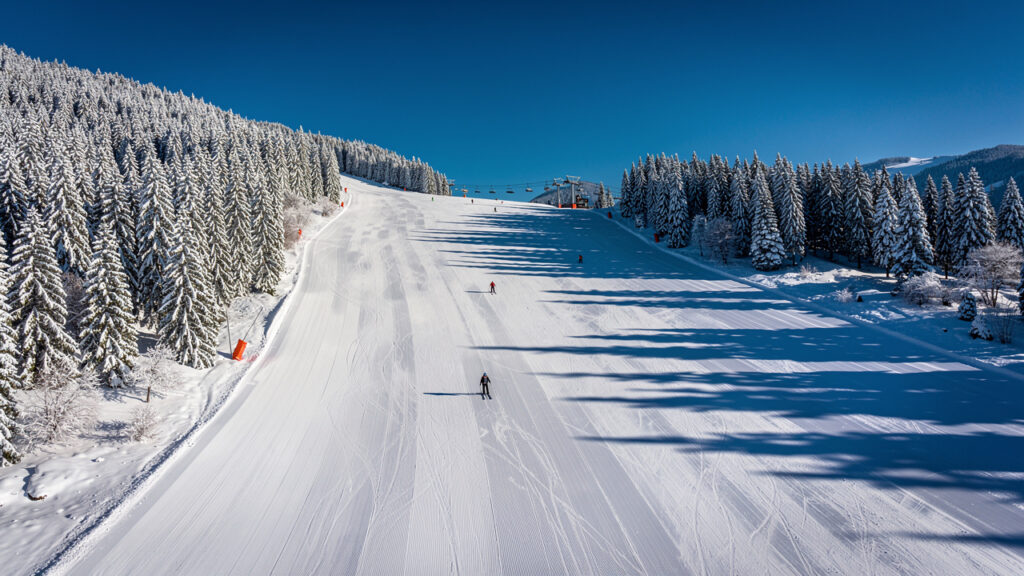
Wearing a helmet on the slopes is mandatory in Bulgaria for children aged 14 and under. For adults, it is strongly recommended, as not wearing one could lead to an insurance claim being rejected after an accident.
- The helmet requirement for children up to the age of 14 is set out in the Ordinance on the Safety and Information Provision of Ski Slopes.
- The fine for a parent whose child is not wearing a helmet ranges from €250 to €1,000; the child is not fined.
- Insurers may refuse to pay compensation after an accident if you were not wearing a helmet.
- A ski helmet should be replaced every 3–5 years, even if it has not suffered any visible impact.
- A poorly fitting helmet or an old model can drastically reduce the level of protection in a fall.
In Bulgaria, wearing a ski helmet is absolutely mandatory for all children aged 14 and under. Adult skiers and snowboarders are not legally required to wear one and face no direct fine for going without, but not wearing a helmet on the slopes can have serious financial consequences, including the possibility of an insurance claim being rejected after an accident.
With traffic on the slopes increasing at resorts such as Bansko and Borovets, especially in recent years, slope safety has become more important than ever. As of 2026, the rules are based on the Ordinance on the Safety and Information Provision of Ski Slopes. It clearly defines the responsibilities not only of skiers, but also of the operators of the facilities.
The legal requirement is only the minimum standard. In practice, a helmet is the only effective protection against serious head injuries, which can occur even in a low-speed fall or a collision with another person on the slope.
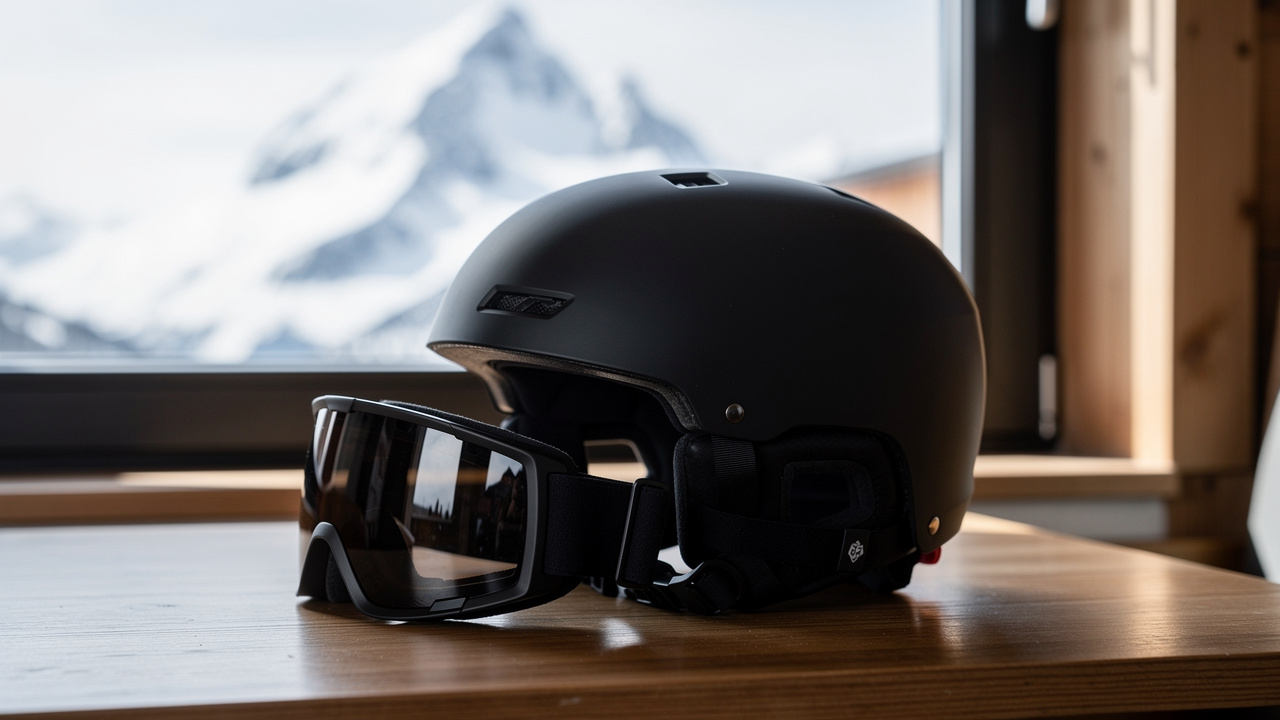
Is wearing a helmet mandatory on ski slopes in Bulgaria in 2026?
Is it compulsory to wear a helmet when skiing?
Yes, it is compulsory for children aged 14 and under under Bulgarian law. For adults, it is strongly recommended for personal safety and to avoid problems with insurance cover in the event of an accident.
The legal framework in Bulgaria is clear, but it is often misinterpreted. The helmet requirement was introduced by the Ordinance on the Safety and Information Provision of Ski Slopes and applies specifically to children. Under the current wording of Article 18, paragraph 4, children aged 14 and under must wear individual ski helmets.
There is no such explicit legal requirement for adult skiers and snowboarders. It is important to distinguish this ordinance from the Road Traffic Act, which is sometimes incorrectly cited in this context. The rules for ski slopes are governed by the Tourism Act and its related secondary legislation, not by the rules that apply to roads and streets.
For an adult, skiing without a helmet is a matter of personal choice, but that choice has consequences. Ski schools and lift operators are entitled to introduce their own rules and require everyone taking part in lessons to wear a helmet, or even make it a condition of access to certain areas such as snow parks.
What are the fines and risks of skiing without a helmet?
What are the fines for skiing without a helmet?
A direct fine applies only to the parent or guardian of a child aged 14 or under who is not wearing a helmet. It ranges from €250 to €1,000. Adults face no direct fine, but their insurance claim could be rejected.
Penalties for failing to comply with the helmet requirement for children are imposed on their parents or guardians, not on the children themselves. Under the Tourism Act, the fine for this offence ranges from 500 to 2,000 leva (approximately €250 to €1,000). Compliance is monitored by officials from the Consumer Protection Commission (CPC) and ski patrols at the resorts.
The situation is different for adults. Although there is no direct administrative penalty, the financial risk can be much greater and lies in the terms of insurance policies. If an accident occurs and medical assistance is needed, the insurer will ask for an incident report. If the report states that the injured person was not wearing a helmet, this may be treated as gross negligence and used as grounds for refusing to cover medical treatment and rescue costs.
Legal requirement: Mandatory for children aged 14 and under
Financial penalty: €250–1,000 fine for a parent/guardian
Insurance risk: Adults may be refused compensation
Operator’s responsibility: May refuse access to a lift or ski school
The practical step you should take is to always check the terms and conditions of your mountain insurance policy. Most modern policies explicitly mention the use of protective equipment as a condition for cover to remain valid.
Beyond the law: Real risks and insurance claims
The biggest mistake is to rely solely on what the law requires. A common example is a skier who has an accident and then has their insurance claim rejected because they failed to take ‘reasonable care for their own safety’. Not wearing a helmet gives the insurance company a strong argument, especially when the claim involves substantial costs for hospital treatment or helicopter transport.
The physical risks are obvious. Even a minor fall backwards can cause the head to hit an icy surface with enough force to result in a concussion or a more serious injury. In a collision with another skier or snowboarder, the impact is many times stronger. Modern ski helmets are designed to absorb and distribute the force of an impact. They often deform or break in order to protect the skull.
Best practice is to treat a helmet not as an optional extra, but as an essential part of your equipment, just like your skis and boots. This is particularly important for skiers who ski aggressively or visit freeride areas and snow parks, where the risk of falling is considerably higher.
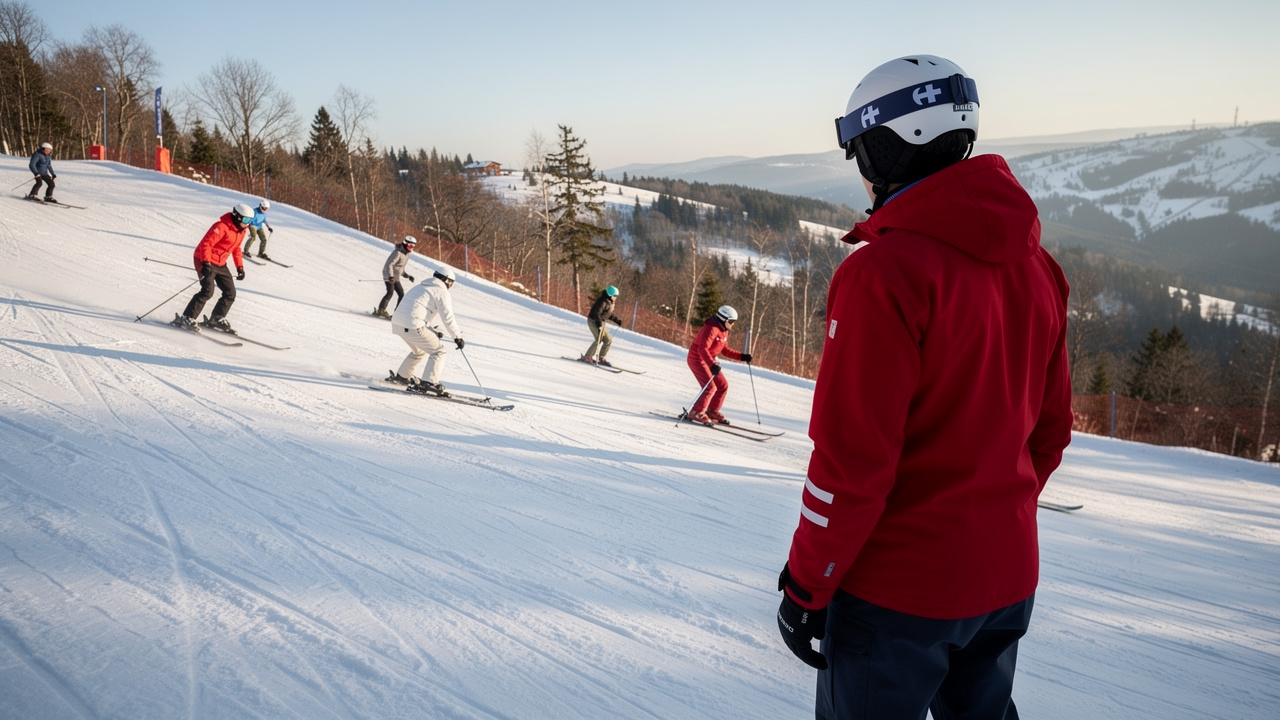
Practical tips: Choosing and using a ski helmet correctly
How do I choose the right ski helmet?
Choose the right size so the helmet fits snugly without feeling tight. Look for a safety certification (EN 1077) and ventilation openings. Make sure it is compatible with your ski goggles.
Experienced skiers know that comfort is just as important as protection. A helmet that is uncomfortable, too heavy or too warm is often taken off or worn incorrectly. When choosing a helmet, be sure to try it on with your ski goggles. There should be no gap between the top edge of the goggles and the helmet, so your forehead does not get exposed to the cold.
Fit is critical. The helmet should not shift forwards, backwards or sideways when you shake your head sharply, even with the chin strap undone. The strap should be snug but still allow you to breathe and speak comfortably. Experts recommend replacing your helmet every 3 to 5 years because the materials age and lose their protective properties, even if the helmet has not been involved in an impact.
Safety certification: Look for the EN 1077 standard (Class A or B)
Material lifespan: Replace every 3–5 years, regardless of use
Critical mistake: Buying a second-hand helmet
Compatibility test: Always try it on with your own ski goggles
Never buy a second-hand helmet. You cannot know whether it has suffered an impact that compromised its internal structure, even if there is no visible external damage. Buying a new, certified helmet is an investment in your health.
Common mistakes and myths about ski helmets
One of the most dangerous myths is that ‘you don’t need a helmet if you’re skiing slowly’. Statistics from mountain rescue services show that many serious accidents happen on easy green runs and at low speeds, often because of a collision with a beginner who has lost control. A helmet protects you not only from your own mistakes, but also from those made by others.
Another common mistake is wearing a hat underneath the helmet. This affects how the helmet fits and creates a slippery surface that can cause it to shift during a fall, making it useless. Most modern helmets have a soft, warm lining that is enough on its own. If you feel cold, wear a thin balaclava designed to be worn under a helmet.
Wearing a helmet on the slopes does not make you invulnerable. It reduces the risk of certain types of injury, but it does not eliminate every danger. Skiing responsibly, within your abilities and according to the conditions, remains the most important factor in your safety.
Frequently asked questions
Is wearing a helmet mandatory when skiing in Bulgaria?
Yes, but only for children aged 14 and under. For adult skiers and snowboarders, wearing a helmet is strongly recommended but is not a legal requirement. However, not wearing one could lead to an insurance claim being rejected after an accident, as it may be considered negligent behaviour.
What is the fine if my child skis without a helmet?
The fine is imposed on the parent or guardian, not the child. Under the Tourism Act, the penalty ranges from 500 to 2,000 leva, equivalent to approximately €250 to €1,000. Compliance is monitored by ski patrols and inspectors from the Consumer Protection Commission.
Can a ski school require me to wear a helmet?
Yes, absolutely. Any ski school or ski slope operator has the right to introduce its own safety rules, which may be stricter than the legal minimum. Most reputable ski schools in Bulgaria require all students, regardless of age, to wear helmets during lessons.
Is my mountain insurance valid if I ski without a helmet?
You risk your insurance being deemed invalid. Many insurers include clauses in their terms and conditions requiring policyholders to take ‘reasonable care’ of their own safety. If an accident occurs, not wearing a helmet may be used as grounds for refusing to cover medical expenses, especially if you have suffered a head injury.
How often should I replace my ski helmet?
It is recommended that you replace your helmet every 3 to 5 years, even if there is no visible damage. The materials it is made of, such as EPS foam, age and gradually lose their ability to absorb impacts. If the helmet has suffered a hard impact, it should be replaced immediately, even if it looks undamaged from the outside.
Are the rules different for skiers and snowboarders?
No. The slope safety rules and the requirement for children aged 14 and under to wear helmets apply equally to skiers and snowboarders. The Ordinance on the Safety of Ski Slopes makes no distinction between the two sports when it comes to mandatory safety equipment.