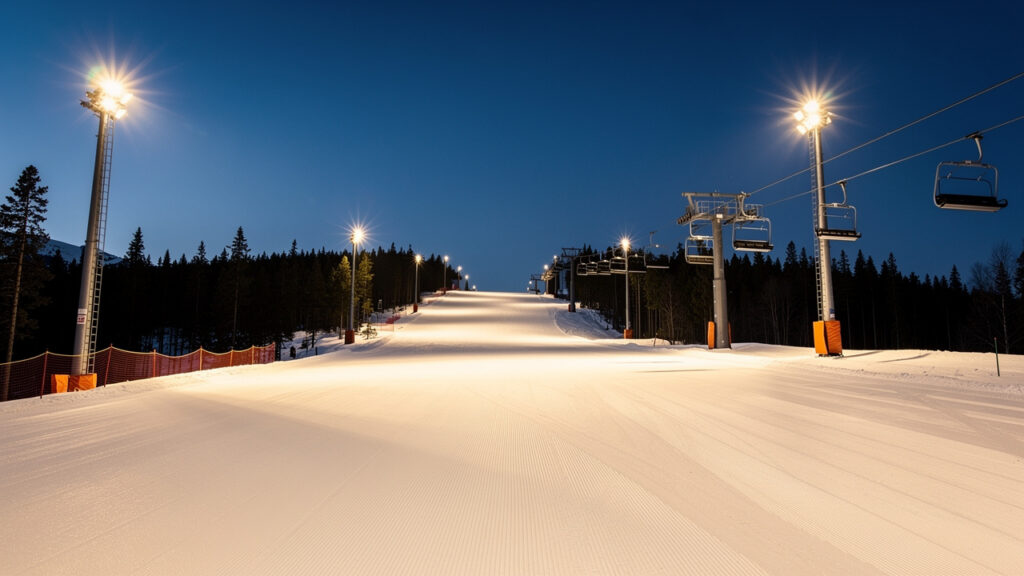
Night skiing is available on several key slopes in Bulgaria, mainly on Vitosha, in Pamporovo and in Borovets. These illuminated runs operate during designated evening hours, usually until 10 pm, and have separate lift-pass prices.
- The main slope for night skiing near Sofia is “Vitoshko Lale”, which operates until 10 pm on selected days.
- Pamporovo offers an illuminated slope called “The Wall”, suitable for intermediate and advanced skiers.
- Night-skiing passes are considerably cheaper than full-day passes.
- As of 2026, Bansko still has no designated slope for regular night skiing open to the general public.
- Reduced visibility and lower evening temperatures call for better equipment and extra caution on the part of skiers.
The main options for night skiing in Bulgaria are on Vitosha (the “Vitoshko Lale” slope), in Pamporovo (Slope No. 2, “The Wall”) and in Borovets (the “Martinovi Baraki” slope). Most operate between 6:30 pm and 10 pm on selected days of the week and require a separate pass, different from the daytime one.
For residents of Sofia and the surrounding area, this makes skiing an easy after-work activity, without having to plan an entire weekend around it. As of 2026, interest in evening skiing is growing, as the slopes are less crowded and offer a completely different experience. The illuminated section of “Vitoshko Lale” is 1,100 metres long.
In practice, however, this service depends heavily on the weather and is not available at every resort. Being properly prepared and checking the current lift status are essential if you want to avoid disappointment.
| Feature | Vitosha (“Vitoshko Lale”) | Pamporovo (“The Wall”) | Borovets (“Martinovi Baraki”) |
|---|---|---|---|
| Operating hours | 6:30 pm – 10 pm (on selected days) | 6 pm – 9:30 pm (on selected days) | 6:30 pm – 10 pm (on selected days) |
| Approximate price | Around €20 | Around €22 | Around €25 |
| Slope length | ~1,100 m | ~1,176 m | ~1,200 m |
| Difficulty level | Intermediate | Advanced (black) | Intermediate |
Night skiing on Vitosha (Aleko and “Vitoshko Lale”)
What are the conditions for night skiing on Vitosha?
Night skiing on Vitosha takes place on the “Vitoshko Lale 1” slope, usually from 6:30 pm to 10 pm. A separate pass is required, and skiing is available on selected days of the week, depending on the season.
“Vitoshko Lale 1” is the most popular and accessible option for night skiing near a major city in Bulgaria. The slope is served by the Vitoshko Lale four-seat chairlift and offers good conditions for intermediate skiers and snowboarders. Its proximity to Sofia makes it especially appealing for a quick escape to the mountains after work.
In normal traffic, a skier coming from the southern districts of the capital can reach the lift in less than 40 minutes. That leaves enough time for a full skiing session of an hour and a half to two hours, even on a weekday. The slope is groomed before the evening session starts, helping keep the snow in good condition.
Typical pass price: Around €20–23 for an adult
Lift type: Vitoshko Lale four-seat chairlift
Lighting quality: Good, with even coverage along the entire slope
Main drawback: Strong dependence on wind conditions at the top
The most common mistake is heading up the mountain without checking conditions first. Strong winds are common on Vitosha and can bring the lift to a halt without warning. The sensible approach is to check the official website or social media pages of “Vitosha Ski” just minutes before setting off.
What are the options in Pamporovo and Borovets?
Pamporovo and Borovets also offer excellent conditions for evening skiing, although they cater more to holidaymakers staying at the resorts than to people looking to ski after work every day. These slopes are often part of larger resort facilities and offer a different experience from skiing on a mountain next to a city.
In Pamporovo, the illuminated slope is No. 2, known as “The Wall”. It is classified as a black run and is challenging even for experienced skiers, so it is not suitable for beginners. It is over a kilometre long and served by a four-seat chairlift. Skiing down the steep, perfectly lit slope in the evening is a unique experience.
In Borovets, the illuminated “Martinovi Baraki” slope is in the Sitnyakovo ski centre. It is longer and has a more moderate gradient, making it accessible to a wider range of skiers. The resort often arranges additional activities around the lower lift station, creating a lively atmosphere in the evening. The same advice applies here: check conditions in advance, as night skiing is not available every evening.
Is night skiing available in Bansko?
Is night skiing available in Bansko?
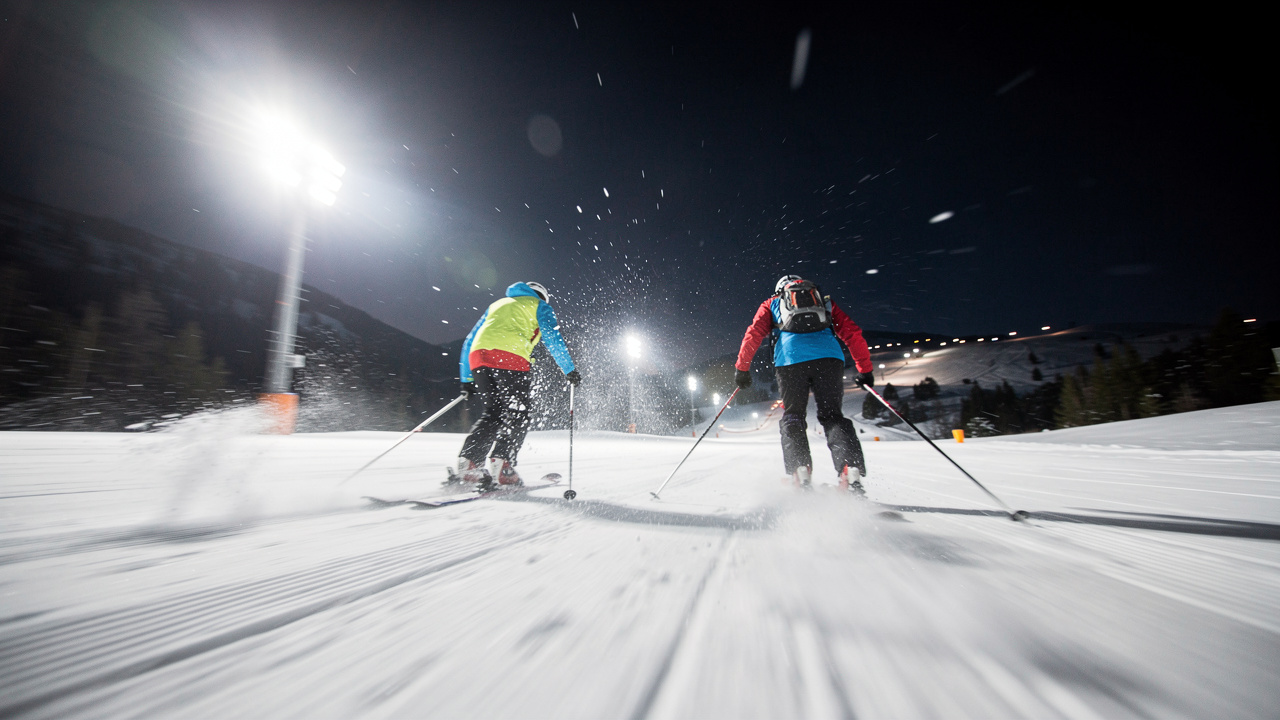
At present, Bansko does not offer regular night skiing for the general public. Only a small section of the ski road is illuminated, but it does not operate as a standard slope for evening runs.
Although it is Bulgaria’s largest and most modern winter resort, Bansko does not offer night skiing in the same way as Vitosha, Pamporovo and Borovets. Part of the ski road connecting Bunderishka Polyana with the town is illuminated, but no lift operates along this route in the evening, and it is not intended for regular night runs.
The reasons are complex and include logistical and environmental considerations related to the location of the slopes within Pirin National Park. Special evening events or competitions are sometimes organised, but they are not part of the resort’s regular programme. Visitors to Bansko should bear in mind that skiing ends when the lifts close at the end of the day.
Equipment and safety: what are the specific risks?
What are the main risks of night skiing?
The main risks are reduced visibility beyond the illuminated area, lower temperatures and the possibility of icy patches forming. Shadows cast by bumps and uneven sections of the slope can also be misleading.
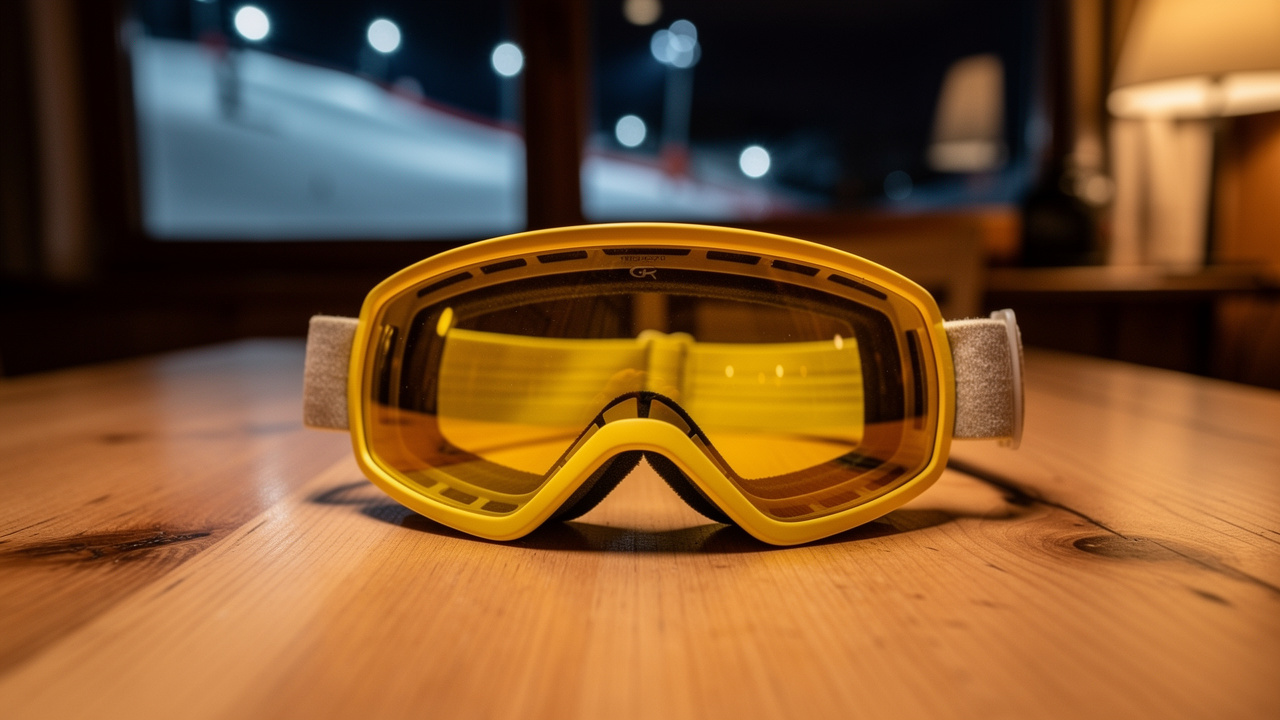
Skiing in the evening comes with specific challenges that call for care and proper preparation. One of the biggest equipment mistakes is wearing dark or unsuitable goggles. For night skiing, you need goggles with clear or yellow lenses, which improve contrast without reducing the amount of light reaching your eyes.
Temperatures drop sharply in the evening. An extra base layer or a warmer jacket is essential. Artificial lighting creates shadows that can hide small bumps or icy patches. That is why it is important to ski at a lower speed and stay alert, especially near the edges of the slope, where the lighting is weaker.
Essential equipment: Ski goggles with clear/yellow lenses
Recommended speed: 20–30% slower than during the day
Common mistake: Leaving the illuminated section of the slope
Critical factor: A sharp drop in temperatures after 8 pm
Experts advise against skiing alone in the evening. In the event of an accident, rescue teams may take longer to respond, while the cold increases the risk of complications. One of the most dangerous mistakes is attempting to take a shortcut through unlit areas. Stay strictly within the marked and illuminated run to keep yourself safe.
Frequently asked questions
How much does a night-skiing pass cost?
Prices vary by resort but are usually between €20 and €25. A night-skiing pass is considerably cheaper than a full-day pass and must be purchased separately. It is best to check the current prices on the relevant ski centre’s website, as they may change during the season.
Is night skiing available for beginners?
Most illuminated slopes are of intermediate to advanced difficulty, and “The Wall” in Pamporovo is a black run. Night skiing can be challenging for complete beginners because of reduced visibility and more difficult conditions. The slope in Borovets is relatively easier and may be a better choice, but always take your own ability into account.
Do I need special equipment for night skiing?
Yes. The most important item is a pair of ski goggles with clear or yellow lenses, which provide better contrast and visibility under artificial lighting. Sunglasses and goggles with dark lenses are entirely unsuitable. You should also dress more warmly, as temperatures drop considerably after sunset.
Which days of the week offer night skiing?
This depends entirely on the resort and the season. Night skiing is usually offered on the busiest days, such as Wednesday, Thursday, Friday and Saturday, but the schedule can change. The safest way to find out is to check the ski area’s weekly programme on its official website before planning your visit.
Is night skiing more dangerous?
Night skiing comes with specific risks, including reduced peripheral vision, shadows that can hide uneven patches and lower temperatures. Ski sensibly, keep your speed under control and stay on the illuminated section of the slope, and it can be just as safe as skiing during the day. The key is to stay alert and use the right equipment.