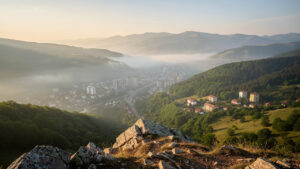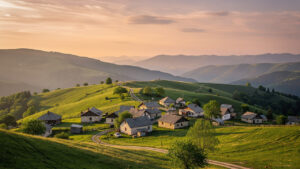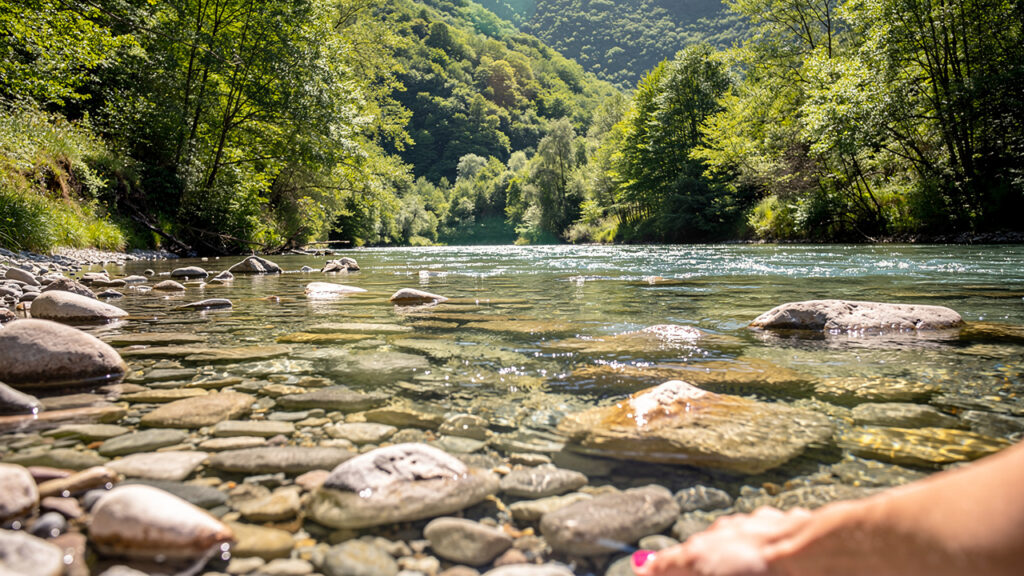
Gold-bearing rivers in Bulgaria are mainly found in mountainous regions such as the Rhodopes, the Balkan Mountains and Sredna Gora. Successful prospecting requires a gold pan, a shovel and an understanding of river sediments.
- The Stryama, Topolnitsa and Arda rivers are among the best-known destinations for searching for placer gold.
- The law allows up to 2 grams per day to be collected for personal use without a special permit.
- Basic equipment for beginners includes a pan, sieve and small shovel, costing less than €100.
- The most common mistake is choosing the wrong spot along the river, which can lead to finding nothing.
- Real gold is soft and bends, while pyrite (“fool’s gold”) is hard and breaks.
The richest placer gold concentrations are found on the inside bends of rivers and behind large rocks in rivers such as the Arda, Stryama and Ogosta. Success depends on searching in areas with slower-moving water, where heavy particles settle. Finding gold is primarily a matter of geology rather than luck, and exploring old river terraces often produces better results than working directly in the riverbed.
Gold panning is becoming a popular hobby in Bulgaria, combining outdoor adventure with the excitement of discovery. As of 2026, more and more enthusiasts are looking for secluded stretches of river away from industrial mining sites. This activity offers a unique way to connect with the nature and history of these lands, where gold has been mined since the time of the Thracians.
Despite the romantic myth that all our rivers contain gold, the reality is that only certain geological zones have significant concentrations. Success depends not on chance, but on systematically understanding the terrain and using the right panning technique. This is what separates the hobby from simply spending fruitless hours by the water.
| Region / River Basin | Type of Gold | Accessibility | Experience Required | Specific Risks |
|---|---|---|---|---|
| Rhodopes (Arda, Krumovitsa) | Dust and small flakes | Moderate to difficult | Beginner to intermediate | Steep banks, sudden rises in water level |
| Balkan Mountains (Ogosta, Lom) | Mostly gold dust | Easy to moderate | Beginner | Polluted areas, private properties along the banks |
| Sredna Gora (Stryama, Topolnitsa) | Flakes and larger particles | Easy | Beginner to intermediate | Intensive agriculture, restricted access in some areas |
What are the main gold-bearing regions in Bulgaria?
Where is the gold and what do you need to find it?
Gold is found in the sediments of mountain rivers in the Rhodopes, the Balkan Mountains and Sredna Gora. To find it, you need a gold pan, a shovel and patience for working the bends of the river.
The main gold-bearing regions in Bulgaria are concentrated in three major mountain ranges, each with its own characteristics. The Rhodopes, especially along the Arda River and its tributaries such as the Krumovitsa and Varbitsa, have historically been known for placer gold. Here, gold is more commonly found as fine dust and small flakes, requiring a more precise panning technique.
The second key region is Sredna Gora, with rivers such as the Stryama, Topolnitsa and Luda Yana. These rivers drain areas with known ore deposits, which explains the presence of larger gold particles, including small nuggets. Many of these areas are relatively easy to access, making them popular among enthusiasts. In contrast, the rivers of the Western Balkan Mountains, such as the Ogosta and Lom, are also known to be gold-bearing, but the gold there is mostly fine.
It is important to distinguish recreational prospecting from industrial mining. Sites such as the deposit at Chelopech or Ada Tepe near Krumovgrad, mentioned by BNT, are industrial sites with huge reserves that are inaccessible to individual prospectors. Recreational prospecting focuses on placer gold in river sediments rather than extracting gold from rock.
What equipment do you need for gold panning?
What equipment is absolutely essential for beginners?
For beginners, only three things are essential: a gold pan (American-style), a small folding shovel and a container for collecting the concentrate. Everything else is an added convenience.
The most common mistake beginners make is investing in expensive and complicated equipment before mastering the basics. In fact, only a few basic tools are needed to get started successfully. The gold pan is the most important of them. Standard models have special channels (riffles) that trap heavy particles such as gold, while lighter sand and gravel are washed away.
In addition to the pan, you will need a sturdy shovel or pickaxe for digging through river sediments. Folding military shovels are an excellent choice because they are compact and easy to carry. You will also need a small container, such as a vial or test tube, for storing any gold you find. For more serious work, a sluice can also be added, allowing you to process a larger volume of material, but this is a step for more advanced prospectors.
Main Tool: Gold pan
Typical Starter Kit Price: €50 – €100
Critical Mistake: Using a smooth pan without riffles
Essential Addition: Small shovel and tweezers
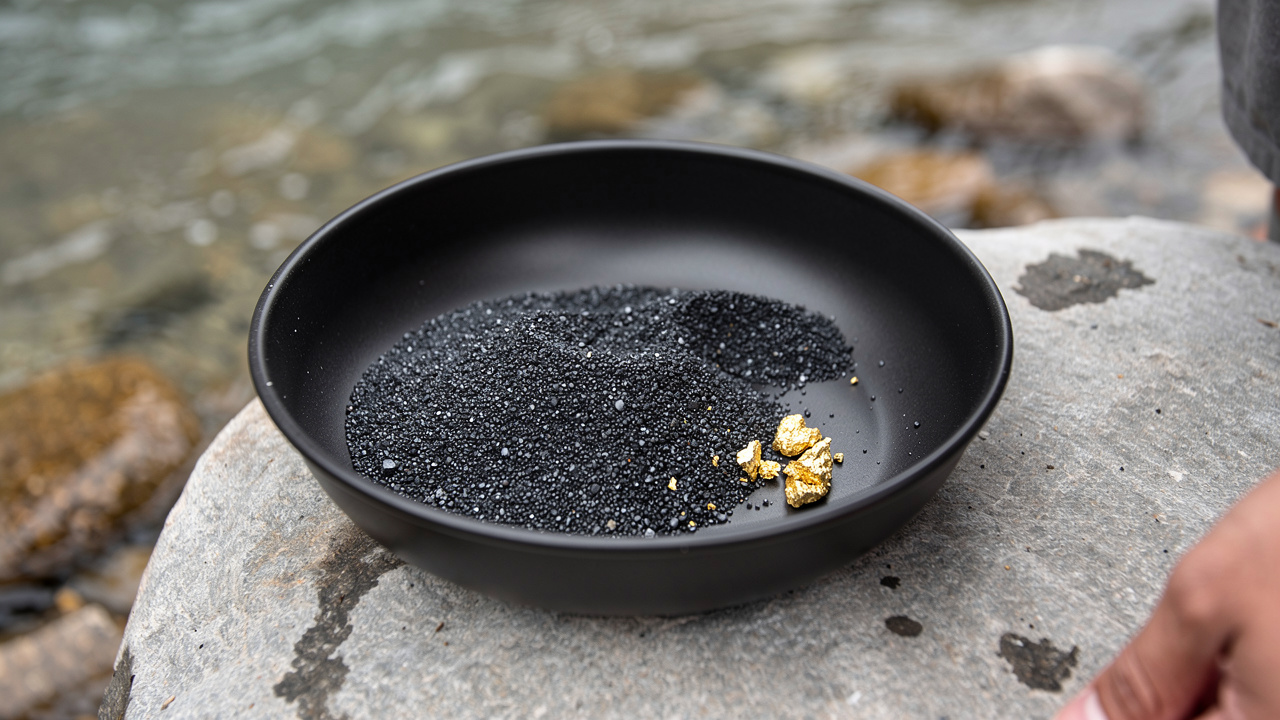
The practical step you need to take is to learn how to use the pan correctly. Fill it about two-thirds full with material, submerge it in water and use circular movements to wash away the larger stones and lighter sand. Repeat the process until only heavy black sand (magnetite) and possibly gold particles remain at the bottom.
Gold panning techniques: from beginners to advanced
Expert technique is distinguished not by speed, but by the ability to “read” the river. Experienced prospectors do not dig at random. They look for specific indicators such as areas of black sand, cracks in the bedrock and places where the current suddenly slows down. Samples are taken specifically from these spots.
For beginners, the basic technique is simple panning. The key is patience and consistency. Do not give up if the first few pans are empty. The most important thing is to learn how to balance the pan and control the washing process so that you do not throw away the gold along with the sand. Practice with lead shot in sand until you stop losing it.
More advanced prospectors often use sluice boxes. This is a channel with riffles and a special mat that is placed in the river current. Material is fed into the upper end, and the water washes away the lighter fractions while the gold is caught in the riffles. This allows hundreds of times more material to be processed compared with manual panning. Using a sluice, however, requires a better understanding of the river and is often subject to stricter regulations.
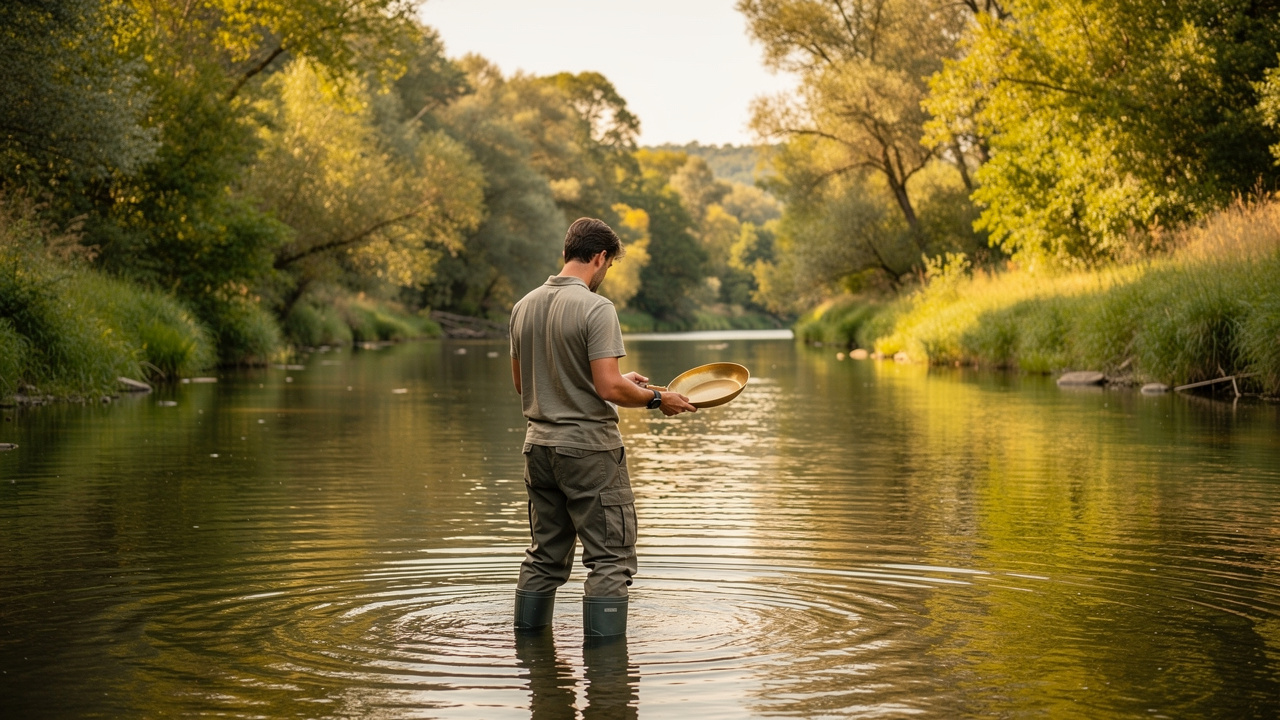
Legal framework and risks when exploring gold-bearing rivers
Is it legal to search for gold in rivers for personal use?
Yes, it is legal, but with restrictions. The Subsoil Resources Act allows the collection of minerals, including gold, for personal collections in small quantities (up to 2 grams per day), without a permit.
The legal framework for gold prospecting in Bulgaria is defined by the Subsoil Resources Act. It clearly distinguishes prospecting for personal purposes from commercial mining. Every Bulgarian citizen has the right to collect mineral specimens, including gold, in limited quantities without needing a concession or permit. The limit established in practice is around 1–2 grams per day.
The main risk is entering private property or concession areas. Before you begin working in a particular area, it is advisable to check whether it is part of an active concession for mineral extraction. Checking the property with the municipal authorities or consulting the public registers of the Ministry of Energy can save you from serious fines and confiscation of your equipment. Current data as of 2026 indicate increased control in areas around major deposits.
Legal Provision: Subsoil Resources Act
Daily Limit (Hobby): Up to 2 grams
Main Risk: Entering a concession area
Penalty: Fine and confiscation of equipment
Another often-overlooked risk is environmental. When working, especially with sluices, you should not excessively muddy the water or damage the riverbanks. The use of chemicals such as mercury for amalgamation is absolutely prohibited and is punishable by law as a serious environmental offense.
How to identify real gold and common mistakes
The biggest disappointment for a beginner is “fool’s gold.” This is actually pyrite – an iron sulfide with a shiny, brassy-yellow color, but it is much lighter and harder than gold. Vermiculite (a type of mica) is also commonly encountered. It glitters in the sunlight, but when panning, it floats and washes away easily.
Real gold has several distinctive characteristics. It is extremely heavy – almost twice as heavy as lead. When you pan, gold particles will always remain at the very bottom, even below the black sand. Its color is a rich yellow and does not change depending on the angle of the light, unlike pyrite, which sparkles. The most reliable field test is the malleability test: if you press the particle with the tip of a knife or needle, real gold will deform (leaving an indentation), while pyrite will break or crumble into powder.
One common mistake is panning too aggressively. Impatience causes many people to wash away fine gold along with the sand. The process should be slow and methodical. Another mistake is digging in the wrong places, such as in the middle of a fast current. Gold settles where the energy of the water decreases. That is why you should always check the inside of bends, behind large rocks and around tree roots along the bank. These places are natural traps for heavy minerals.
The final test is extremely simple: place the suspicious particle on a dark surface and rub it with your finger or a metal object. Gold will leave a yellow, shiny streak. Pyrite will leave a blackish-greenish, powdery streak. This is the quickest way to make sure of your find before heading home.
Frequently Asked Questions
Which rivers in Bulgaria have the most gold?
The rivers with the highest concentrations of placer gold are in southern Bulgaria, mainly along the Arda and its tributaries such as the Krumovitsa. The Stryama and Topolnitsa rivers in Sredna Gora are also known for their good deposits, with a chance of finding larger particles and even small nuggets.
How much does gold panning equipment cost?
The basic starter kit for a hobby gold prospector is affordable. A quality gold pan, small shovel and several sample containers usually cost between €50 and €100 in total. More complex equipment such as sluices and metal detectors can cost hundreds or thousands of euros, but they are not necessary for beginners.
Can you find gold in every river?
No, this is a popular myth. Although theoretically almost all rivers carry microscopic amounts of gold, significant concentrations that can be recovered by panning are found only in rivers passing through specific geological zones. These are mainly mountainous areas with quartz veins or old ore deposits.
What is the difference between gold and pyrite?
Pyrite, known as “fool’s gold,” is hard and brittle – it breaks under pressure. Real gold is very soft and bends or deforms. Gold also has a consistent, rich yellow color, while pyrite sparkles and changes its hue when viewed from different angles. Gold is also significantly heavier.
Are there organized gold prospecting tours in Bulgaria?
Yes, several associations and private guides organize courses and one-day gold-panning tours. They usually take place along the Stryama and Arda rivers. Taking part in such a tour is an excellent way for beginners to learn the basic techniques and visit proven productive locations.