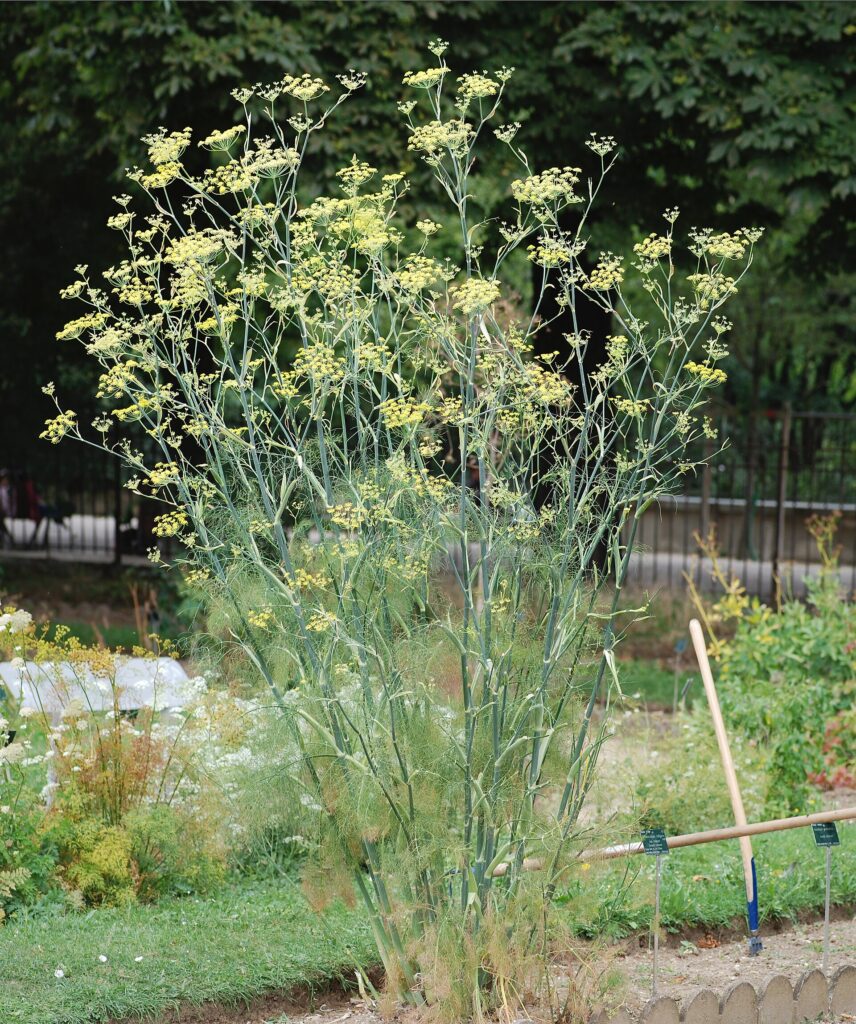
Fennel (Foeniculum vulgare), rezene in Bulgarian, is a strongly aromatic perennial of the carrot family (Apiaceae), native to the Mediterranean. Bulgarians also call it div kopar (“wild dill”), koprets and morach. In Bulgaria it is grown as an essential-oil crop.
- Type: perennial herb, up to 2 m tall.
- Flowering: July – September, with yellow flowers.
- In Bulgaria: 2,255–3,082 ha in the years reported for 2013–2017.
- Parts used: seeds, leaves and, in some varieties, the bulb-like base.
- Caution: wild plants of this family can be mistaken for poison hemlock.
- Status: cultivated; free to grow.
How do you recognise fennel, and what is it confused with?
How is fennel different from dill and poison hemlock?
Fennel is far taller than dill: up to 2 m against the usual 40–60 cm. Both have yellow flowers, but fennel’s leaves are thinner. Poisonous hemlock has white flowers and a hollow stem usually marked with dark spots.
| Feature | Fennel | Dill | Poison hemlock |
|---|---|---|---|
| Latin name | Foeniculum vulgare | Anethum graveolens | Conium maculatum |
| Height | up to 2 m | usually 40–60 cm | – |
| Flower colour | yellow | yellow | white |
| Stem | hollow, blue-green | – | hollow, usually with dark spots |
| Edible | yes | yes | no, highly poisonous |
Fennel leaves grow up to 40 cm long and are finely cut into thread-like segments about 0.5 mm wide. The umbels are 5–15 cm across, each section carrying 20–50 tiny yellow flowers.
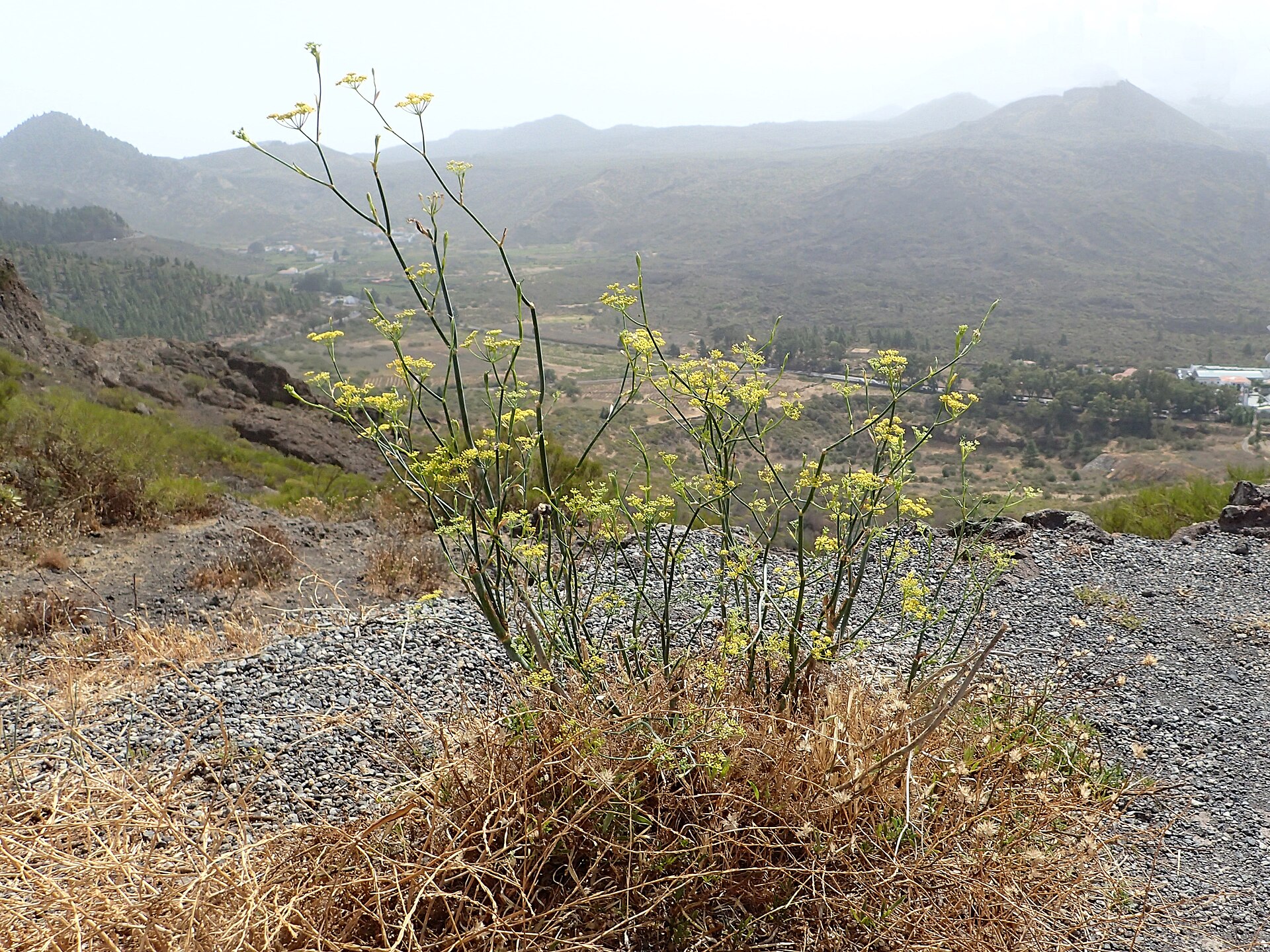
Where is fennel grown in Bulgaria?
Is fennel grown in Bulgaria?
Yes. The Ministry of Agriculture lists it among the less widespread essential-oil crops. In the years reported for 2013–2017, the area under fennel was between 2,255 and 3,082 ha.
It comes from the Mediterranean shores and southwest Asia, and favours dry soils near the sea and riverbanks.
Life cycle: perennial
Height: up to 2 m
Flowering: July – September
Fruit: 4–9 mm, grooved
Essential oil in the fruit: 3–5%
Parts used: fruits, leaves, bulb-like base
How is fennel used in Bulgarian cooking?
What is fennel used for?
In Bulgarian cooking fennel seasons fish and soups. Dried, it goes into pickles together with dill or in its place.
Anethole gives the seeds their anise flavour, and fennel is among the herbs in the blend for mastika. Florence fennel, with its swollen base, is eaten as a vegetable: raw, braised, grilled or roasted.
What traditions are linked to fennel?
The Greek name for fennel is marathon, and the site of the famous battle literally means “plain of fennel”. In Hesiod, Prometheus steals fire from Olympus in a hollow fennel stalk. In Bulgarian folk use it is known as “apothecary’s dill”.
When should you be careful with fennel?
Can children and pregnant women drink fennel tea?
The European Medicines Agency (EMA) says sweet fennel fruit medicines are not recommended in pregnancy, while breastfeeding, or in children under 4, because there is not enough data.
Fennel contains estragole. The EMA advises keeping estragole exposure to a minimum in young children and in pregnant and breastfeeding women, and products for children aged 4 to 12 have a daily intake limit. Ask a paediatrician before giving fennel tea to a baby or child.
Frequently asked questions
Are fennel and dill the same?
No. They belong to the same family but to different genera. Fennel is much taller and perennial.
Are fennel and anise the same?
No. They taste alike because of anethole, but they are different plants. Anise fruits are smaller.
When does fennel flower?
From July to September, with tiny yellow flowers in umbels.
Is fennel tea safe for babies?
The EMA does not recommend fennel medicines for children under 4 because of insufficient data. Ask a paediatrician.
What is fennel called in Bulgarian?
Резене (rezene), also див копър (div kopar, “wild dill”). Its Latin name is Foeniculum vulgare.