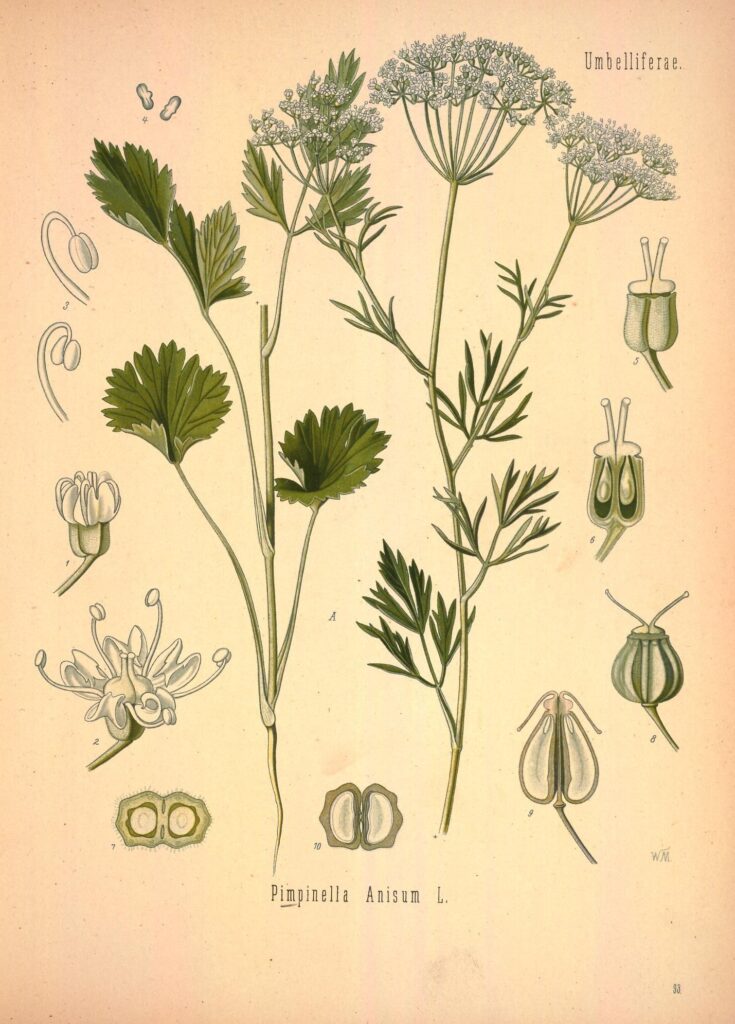
Anise (Pimpinella anisum), anason in Bulgarian, is an annual cultivated plant of the carrot family (Apiaceae), native to the Eastern Mediterranean and southwest Asia. It is one of the spices that flavour Bulgarian mastika.
- Type: annual herb, 60–90 cm tall.
- In Bulgaria: recorded along the Osam river, at Lovech and Butovo.
- Parts used: the fruits (seeds) and leaves.
- The fruits hold 2–7% essential oil, mainly anethole.
- Caution: not the same as star anise, whose Japanese relative is poisonous.
- Status: cultivated; free to grow.
How do you recognise anise, and what is it confused with?
What is the difference between anise, fennel and star anise?
Anise and fennel are umbellifers with a similar taste, but anise fruits are smaller. Star anise (Illicium verum) is the fruit of an evergreen tree from China and is unrelated to anise. Japanese star anise (Illicium anisatum) looks like it but is highly poisonous.
| Spice | Latin name | What it is | Edible |
|---|---|---|---|
| Anise | Pimpinella anisum | annual herb, white flowers | yes |
| Fennel | Foeniculum vulgare | perennial herb, yellow flowers | yes |
| Star anise | Illicium verum | fruit of an evergreen tree | yes |
| Japanese star anise | Illicium anisatum | fruit of an evergreen shrub or tree | no, highly poisonous |
The lower leaves of anise are rounded and coarsely toothed, the upper ones feathery and finely cut. The flowers are small and white, in umbels with 8–12 rays. The fruits are egg- or pear-shaped, 4–6 mm, and covered in fine hairs.
Where is anise found in Bulgaria?
Does anise grow in Bulgaria?
Yes. Bulgarian Wikipedia records it in various parts of the country, including along the Osam river at Lovech and Butovo. It is mainly a cultivated plant.
It grows best in light, fertile, well-drained soil and is sown as soon as the ground warms in spring. Its taproot makes it hard to transplant, so it is sown where it will stay.
Life cycle: annual
Height: 60–90 cm
Flowers: small, white, in umbels
Fruit: 4–6 mm
Essential oil: 2–7%, mainly anethole
Parts used: fruits and leaves
How is anise used in Bulgarian cooking?
What is anise used for?
The seeds go into sweets and herbal teas, and the leaves season salads. The essential oil flavours drinks, among them Bulgarian mastika.
Anise also flavours Greek ouzo, Italian sambuca, Turkish rakı and arak. These drinks are clear but turn cloudy when water is added, which is known as the ouzo effect.
What is the history of anise?
Anise has been grown in Egypt for about 4,000 years and was brought to Europe for its medicinal value. Pliny the Elder describes chewing it in the morning to freshen the breath. These uses belong to tradition and are not a proven treatment.
When should you be careful with anise?
Who should not use anise medicines?
The European Medicines Agency (EMA) says aniseed medicines are only for adults and adolescents over 12 and should not be taken for more than two weeks. They are not suitable with an allergy to anise, anethole or plants of the carrot family, such as caraway, celery, coriander, dill and fennel.
Anise also contains estragole. The EMA advises keeping estragole exposure to a minimum in young children and in pregnant and breastfeeding women.
Frequently asked questions
Are anise and star anise the same?
No. They are different plants, but both contain anethole, so they taste alike.
Are anise and fennel the same?
No. Anise is an annual with white flowers; fennel is a perennial with yellow ones.
Is there anise in mastika?
Yes. Anise is one of the spices that flavour Bulgarian mastika.
Why does mastika turn white with water?
Because of the ouzo effect: a clear anise drink turns cloudy when water is added.
What is anise called in Bulgarian?
Анасон (anason). Its Latin name is Pimpinella anisum.