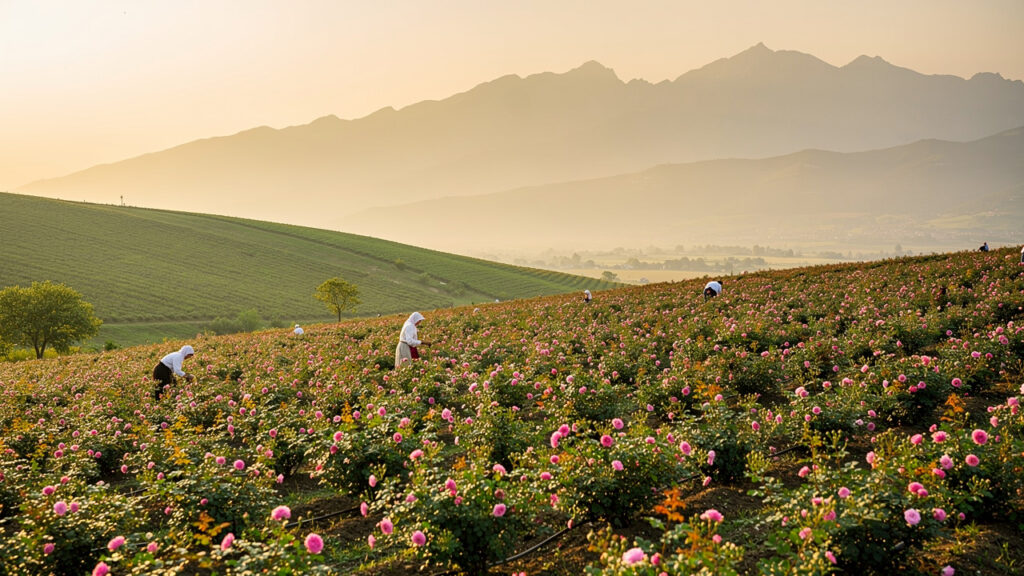
The Bulgarian rose (Rosa damascena) is the basis for producing some of the highest-quality rose oil in the world. Its uniqueness is due to the specific climate of the Rose Valley and centuries-old distillation traditions.
- Authentic rose oil crystallizes at temperatures below 20–22°C, which is considered a reliable test of authenticity.
- About 3.5 tons of fresh rose blossoms are needed to produce one kilogram of rose oil.
- The Rose Festival in Kazanlak traditionally takes place in late May and early June each year.
- In addition to perfumery, rose oil is used in cosmetics and aromatherapy because of its properties.
- Products with the protected geographical indication ‘Bulgarian Rose Oil’ guarantee origin and quality.
The key to authentic Bulgarian rose oil is not only its aroma, but also its physical properties – it crystallizes when cooled. Its price, reaching thousands of euros for small quantities, is a direct result of the enormous amount of manual labor and tons of blossoms needed to produce just milliliters of this elixir, known as ‘liquid gold’.
For Bulgaria, this product is much more than an export commodity; it is a symbol of national identity and a centuries-old tradition embedded in the country’s cultural heritage. As of 2026, the growing focus on sustainable and locally produced goods is increasing global interest, while the status of ‘Bulgarian Rose Oil’ as a protected geographical indication (PGI) in the EU gives it a significant advantage.
Despite attempts to grow oil-bearing roses in other parts of the world, the unique combination of soil, humidity and temperature in Bulgaria’s Rose Valley produces a product with an unmatched chemical composition. It is precisely this complex profile that makes it an indispensable ingredient in high-end perfumery.
| Product | Production and Consistency | Main Application | Typical Price |
|---|---|---|---|
| Rose Oil (Otto) | Steam distillation; 1 kg from ~3,500 kg of blossoms. Oily liquid that crystallizes when cold. | High-end perfumery, pharmaceuticals, aromatherapy. | ~€25–50 per 1 ml |
| Rose Water | Secondary product of distillation. Watery liquid. | Cosmetics, facial toners, culinary uses. | ~€5–10 per 200 ml |
| Rose Concrete | Solvent extraction; 1 kg from ~350 kg of blossoms. Waxy mass. | Production of rose absolute, cosmetics. | ~€15–20 per 5 g |
| Rose Absolute | Extraction from rose concrete. Thick liquid with a rich aroma. | Perfumery, high-end fragrances. | ~€20–40 per 1 ml |
Why is Bulgarian rose oil considered the highest quality?
Bulgarian rose oil: Why is it considered the best in the world?
It is a global benchmark because of its unique chemical composition, containing more than 280 components, which cannot be synthetically reproduced or replicated in other geographical regions.
The status of Bulgarian rose oil as a world leader is not accidental. It is due to the specific variety Rosa damascena Mill., cultivated for centuries under the very specific climatic conditions of the foothills of the Balkan Mountains, known as the Rose Valley. The combination of sandy soils, high humidity and temperature variations creates rose blossoms with an exceptionally high content of essential oils and a rich, complex aroma.
The distillation process, refined over generations, also plays a key role. According to data from the agricultural authorities, Bulgarian rose oil is the most expensive on the international market precisely because of its quality. Unlike oils from other regions, it has a perfect balance of key components such as citronellol, geraniol and nerol, which give it its characteristic deep and long-lasting aroma.
The production process: From the blossom to ‘liquid gold’
The production of rose oil is an extremely labor-intensive and delicate process that depends heavily on the weather. Rose picking begins before sunrise, usually around 4–5 a.m., and must be completed by 10 a.m. The reason is that the morning dew helps retain the essential oils in the blossoms, and as the sun warms them, the oils begin to evaporate, drastically reducing both the quantity and quality of the final product.
The most common mistake that compromises quality is delaying distillation. The freshly picked blossoms must be processed within hours. Each kilogram of rose blossoms consists of thousands of delicate petals, collected by hand. Producing just one kilogram of rose oil requires between 3,000 and 4,000 kilograms of rose blossoms – enough to fill an entire truck.
Picking Time: Before sunrise (4–10 a.m.)
Required Quantity: ~3.5 tons of blossoms for 1 kg of oil
Critical Factor: Distillation on the same day
Main Variety: Rosa damascena Mill. f. trigintipetala
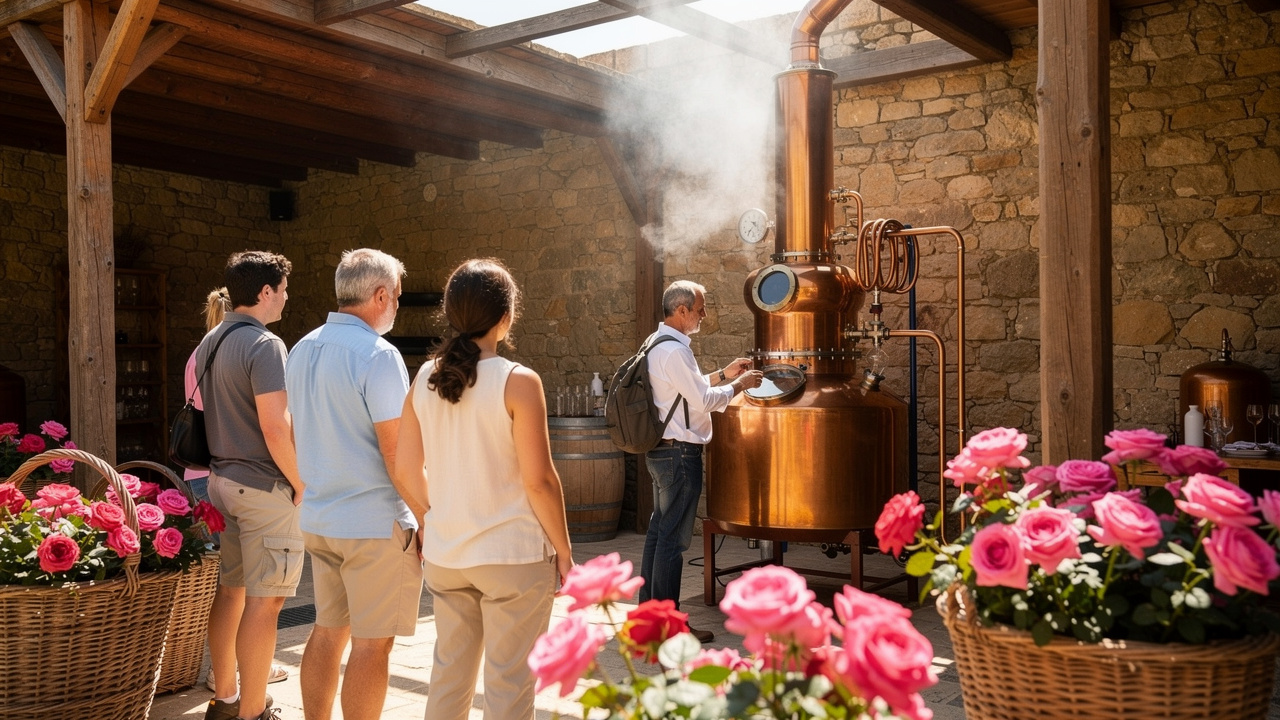
Experienced distillers know that not only the timing but also the ‘pace’ of distillation matters. The steam distillation process in traditional copper stills (alembics) must be slow and controlled in order to extract all the delicate aromatic notes without ‘burning’ the sensitive material. It is a craft passed down from generation to generation.
How to identify real rose oil and avoid imitations
How can you identify authentic Bulgarian rose oil?
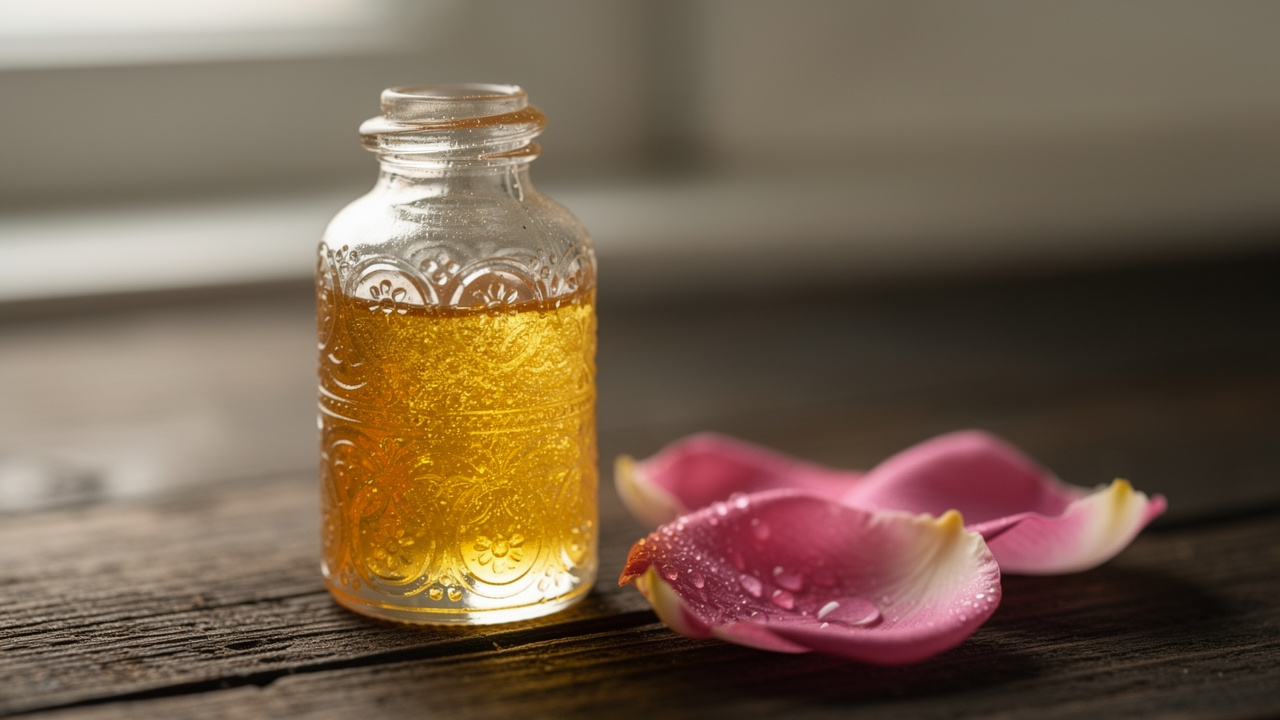
The most reliable test is cooling. Authentic rose oil begins to crystallize and thicken at around 20–22°C, while synthetic alternatives remain liquid.
The biggest risk when buying rose oil is ending up with a diluted or entirely synthetic product sold as authentic. Imitations often contain geranium oil, which is several times cheaper. The first and easiest test you can perform, even in a shop, is the cooling test. Place the bottle (usually a traditional wooden muskall) in the refrigerator for a few minutes or hold it next to a glass of ice. The appearance of frost-like crystals is considered a reliable sign of authenticity.
Another important marker of quality and origin is the EU Protected Geographical Indication (PGI) logo – ‘Bulgarian Rose Oil’. This certification guarantees that the oil was produced using traditional technology from roses grown in a strictly defined region of Bulgaria, including the municipalities of Kazanlak, Karlovo, Strelcha and others. Products without this mark carry a significantly higher risk.
Price is also an indicator. If you come across ‘pure’ rose oil priced at just a few euros per milliliter, the product is almost certainly fake or heavily diluted. The production costs of genuine rose oil are so high that such a low price is economically impossible. Always buy from established producers or specialized shops.
Applications beyond perfumery: Health and culinary uses
It is a misconception that the use of products from the Bulgarian rose is limited to perfumery. Rose water, a secondary product of distillation, is a key ingredient in facial cosmetics. It has soothing, anti-inflammatory and moisturizing properties, making it ideal for toners, micellar waters and creams, especially for sensitive skin.
Cosmetic Action: Soothing, anti-inflammatory
Aromatherapy Effect: Reduces stress and anxiety
Contraindication: Never take it internally in its pure form
Culinary Use: Rose water in desserts (lokum, syrups)
In aromatherapy, rose oil itself is used to reduce stress, anxiety and symptoms of depression. A few drops in a diffuser or massage oil can have a strong relaxing effect. It is important to note that pure rose oil is extremely concentrated and should never be applied directly to the skin undiluted or taken internally without medical advice.
A lesser-known aspect is its culinary use, mainly through rose water. It is a traditional ingredient in Bulgarian lokum, various syrups, preserves and even some gourmet desserts. Adding a teaspoon of rose water to rice pudding or crème caramel gives it an exotic and refined aroma.
The Bulgarian rose in the Rose Valley: An experience for the senses
When is the best time to visit the Rose Valley?
The best time is from late May to mid-June during the rose-picking season and the Rose Festival, when the fields are in bloom and authentic rituals take place.
To truly experience the spirit of the Bulgarian rose, you should visit the Rose Valley during the rose-picking season. While the Rose Festival in Kazanlak attracts the most tourists, the more authentic approach is to head to the smaller villages in the area – such as Skobelevo, Tazha or Rozovets. There, you can witness the traditional rose-picking ritual, take part in it and visit small family-run distilleries where the owners often personally demonstrate the process.
This experience is much more than a tourist attraction. Being in a rose field at 5 a.m., when the air is cool and filled with fragrance and your fingers touch the delicate, dew-covered blossoms, is a deeply sensory experience. Many local guesthouses offer packages that include participation in rose picking and a visit to a distillery, which is also the best way to immerse yourself in the local culture.
Plan your visit for the first two weeks of June. This is the peak of the blooming season and when most festival events take place. Book accommodation months in advance, as places fill up quickly. Be sure to visit the Rose Museum in Kazanlak as well, which traces the history of ‘liquid gold’ back through the centuries.
Before buying souvenir oil from street stalls, put what you have learned into practice. Ask to cool the bottle – if the seller refuses or the product remains liquid, simply move on. The real experience lies in knowledge, not just in the purchase.
Frequently Asked Questions
What is the difference between rose oil and rose water?
Rose oil is the pure, highly concentrated essential oil extracted through distillation. Rose water is the aromatic water that remains after the oil is separated during the same process. It is much less concentrated and is mainly used in cosmetics and cooking.
Can Bulgarian rose oil be applied directly to the skin?
No, pure rose oil is too concentrated and should not be applied directly to the skin, as it may cause irritation. It should always be diluted in a carrier oil (such as almond or jojoba oil) at a ratio of 1–2 drops of rose oil per 10 ml of carrier oil before use.
How long does Bulgarian rose oil last?
When stored properly – in a dark, cool place and in a tightly sealed container – authentic Bulgarian rose oil has an exceptionally long shelf life. It does not spoil, and over time its aroma may even become deeper and more complex. Its shelf life can exceed 5–10 years.
Why is Bulgaria’s Rose Valley so special for growing roses?
The uniqueness of the Rose Valley is due to its microclimate – protected by mountains on both sides, with mild winters, high humidity in spring and distinctive soils. This combination is difficult to reproduce elsewhere and contributes to the oil’s unique chemical composition and aroma.
Can you visit a rose distillery during the rose-picking season?
Yes, many rose distilleries in the Kazanlak, Karlovo and Strelcha areas are open to visitors during the rose-picking season in May and June. Some offer demonstrations of the distillation process and even allow visitors to take part in the traditional rose-picking ritual. It is recommended to contact them in advance to arrange a visit.