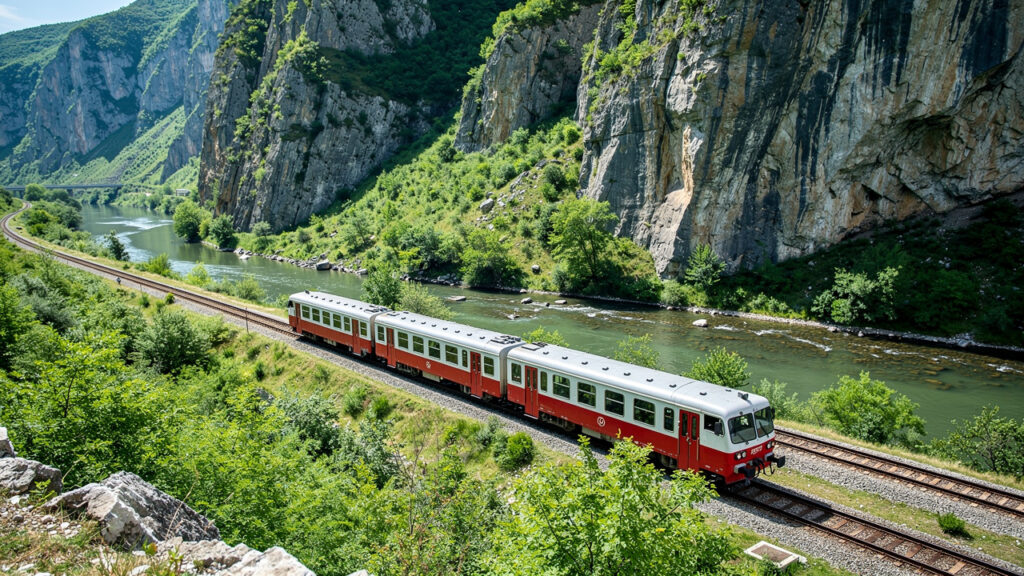
Traveling around Bulgaria by train and bus is entirely possible and budget-friendly, while allowing access to authentic places. The key is planning the connections between the main railway stations and regional bus stations in advance.
- Trains are ideal for scenic routes such as the Iskar Gorge, but are often slower than buses.
- The bus network reaches more small towns and villages in Bulgaria where trains do not stop.
- Ride-sharing offers flexibility, but prices vary widely and the service is not regulated.
- Always allow at least 60 minutes when changing between a train and a bus because of possible delays.
- A weekly rail travel pass can significantly reduce overall costs on an intensive itinerary with many segments.
Organizing a seven-day trip around Bulgaria without a car is not only possible, but can often be a more authentic and affordable experience. Success lies in combining the main long-distance railway lines with the flexibility of regional buses, which reach smaller and more hidden corners of the country. It requires planning, but opens the door to views and encounters that remain inaccessible from the highway.
Against the backdrop of changing fuel prices and the growing push toward more sustainable tourism, this type of travel is as relevant as ever in 2026. This approach is not just about saving money. Traveling by train through the Iskar or Kresna Gorge, for example, offers panoramic views that remain hidden from drivers. The journey becomes part of the destination.
The operational reality is that successful car-free travel depends less on speed than on smart planning of connections. Accepting a slower pace and a degree of uncertainty as part of the adventure is key to getting the most out of a trip around Bulgaria.
| Parameter | Train travel | Bus travel | Ride-sharing |
|---|---|---|---|
| Approximate price (Sofia–Burgas) | Around €15–25 | Around €20–30 | €20–40 (varies widely) |
| Access to hidden places | Moderate (to stations in small towns) | High (network reaching almost every village) | High (depends on the driver) |
| Comfort and space | High (more legroom) | Moderate (limited space) | Low to moderate |
| Predictability | Moderate (possible delays) | High (strict schedules) | Low (risk of cancellation) |

How to plan a 7-day trip around Bulgaria without a car?
The first step in planning is researching schedules and routes. For trains, the official BDZ website (razpisanie.bdz.bg) is the most reliable source. For buses, the situation is more complicated because there are dozens of private carriers. Good starting points include sites such as Avtogari.info or the websites of the major bus stations in Sofia, Plovdiv, Varna and Burgas.
The key is to build your route around the main railway arteries and then use buses to reach the final destination. For example, you can easily take a train from Sofia to Plovdiv and then catch a regional bus to Asenovgrad, Bachkovo or the heart of the Rhodopes. Never rely on just one timetable source – always double-check.
The practical rule is to allow enough time for transfers, especially between trains and buses. One hour is a good minimum. This gives you a buffer in case of delays and time to find the right section of the bus station, which is often not located right next to the railway station.
Train travel: romance, prices and unexpected stops
Is train travel in Bulgaria reliable for tourist routes?
Yes, trains are reliable on the main lines between major cities, but delays are not uncommon. For tourism, they offer unique scenic views that are inaccessible by other means of transport.
An experienced traveler uses the train not simply as transport, but as part of the experience. Instead of focusing only on the fastest trains (BVZR), they choose slower passenger services on routes such as the Septemvri–Dobrinishte narrow-gauge railway or the line through the Iskar Gorge. These routes are destinations in their own right. Ticket prices are significantly lower than bus fares, especially with a “Youth” or “Senior” card.
Tickets can be purchased online through the BDZ system, which is highly recommended for popular destinations on weekends and during the summer. For smaller stations and stops, however, the only option may be to buy a ticket from the conductor on the train or at the station ticket office. On a night train, such as Sofia–Varna, a sleeping car offers a convenience that can save you the cost of one night in a hotel.
Train types: Fast train with mandatory reservation (BVZR), fast train (BV), passenger train (PV)
Scenic route: Septemvri–Dobrinishte narrow-gauge railway, named one of the most beautiful in Europe.
Specific limitation: Some small stations do not sell tickets; payment is made directly on the train.
Critical information: Check for line repairs that may result in a train being replaced by a bus.
Bus travel: speed and flexibility on the main routes
What is the easiest way to get from Sofia to the sea by bus?
The easiest option is a direct bus from Sofia Central Bus Station to Burgas or Varna. The journey takes around 6 hours, and in summer it is essential to buy a ticket at least a day in advance.
Bus transport is the backbone of public transportation in Bulgaria, reaching hundreds of settlements where trains have never run. Private companies operate modern buses on major routes such as Sofia–Plovdiv, Sofia–Varna and Sofia–Burgas, offering air conditioning and Wi-Fi. Their flexibility makes them indispensable for reaching resorts and smaller towns.
When planning a bus journey, it is important to know that there is a big difference between national carriers and smaller regional companies. While the former have online ticketing systems and predictable schedules, the latter often operate on a more informal basis. To reach places such as Melnik, Kovachevitsa or Trigrad, you will almost certainly need to use such a regional bus from the nearest regional city. The practical step here is to call the relevant bus station the day before your trip to confirm the schedule.
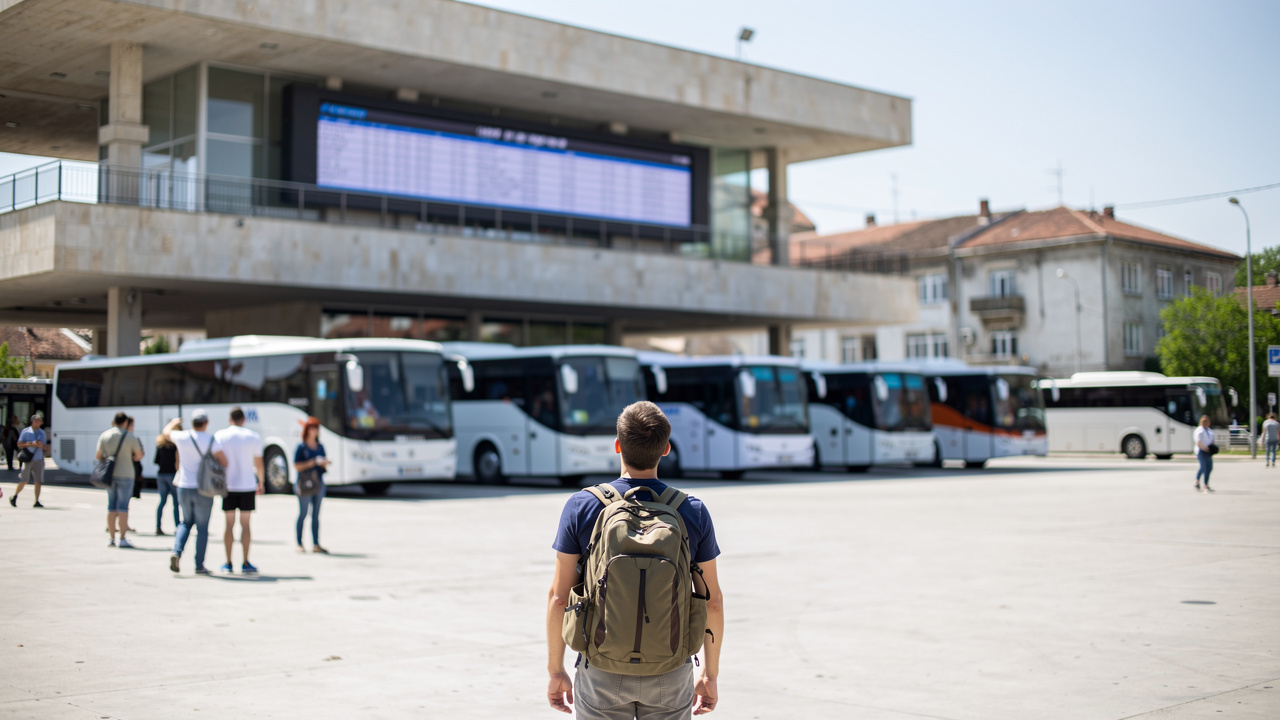
What are the risks and hidden costs of traveling without a car?
The most common failure is the domino effect. A delayed train causes you to miss the only bus of the day to your final destination, leaving you stranded in an unfamiliar town. This is especially relevant when traveling to smaller settlements on weekends, when public transport is much less frequent.
Another underestimated risk is managing your luggage. Although major railway and bus stations have luggage lockers, they are not open around the clock. Arriving late at night or leaving early in the morning may mean carrying all your luggage around while sightseeing. Travel with a light backpack, rather than a large suitcase, to stay mobile. Hidden costs often come in the form of taxis – from a remote railway station to the city center or your hotel, especially when arriving after dark.
Main risk: Missing a train-to-bus connection due to a delay.
Hidden cost: Taxis from stations to hotels, especially in cities with spread-out infrastructure.
Luggage problem: Limited opening hours of station luggage lockers.
Incompatibility: BDZ and bus carrier timetables are not synchronized.
Sample 7-day itinerary: from the mountains to the sea
How much does ride-sharing cost in Bulgaria?
The price of a shared ride varies considerably, but for a route such as Sofia–Plovdiv it is usually around €10–15. It is cheaper than a bus, but offers less certainty and comfort.
This sample itinerary balances cultural tourism with a seaside break, using trains for the main legs and buses for regional connections. It is just an idea that can be adapted according to your personal interests and time.
Days 1–2: Sofia → Plovdiv (by train). Explore the Old Town, Kapana and the cultural sights of Plovdiv. Trains on this route are frequent and fast.Day 3: Plovdiv → Bachkovo Monastery (by bus). Take a regional bus from Plovdiv’s “Yug” Bus Station for a day trip to the monastery.Days 4–5: Plovdiv → Burgas (by train). The journey takes around 4–5 hours. From Burgas, you can use a local or intercity bus to visit Sozopol or Nessebar.Day 6: Burgas → Veliko Tarnovo (by bus). Direct buses are the fastest way to cross the Balkan Mountains and reach the old capital of Bulgaria.Day 7: Veliko Tarnovo → Sofia (by train or bus). Both options are available, with the bus usually being slightly faster.
The overall experience of traveling around Bulgaria without a car is very different. Before you leave, download an offline map of the regions you will visit and save the phone numbers of the bus stations along your route – this is your best insurance.
Frequently Asked Questions
To the sea: by car, train, bus or plane?
The choice depends on your priorities. A car offers the most freedom. The train is budget-friendly and scenic, but often slower. The bus is fast and connects all the resorts, but with less comfort. A plane (Sofia–Varna/Burgas) is the fastest, but also the most expensive, and you miss the opportunity to see the country along the way.
How do you get from Sofia to Sunny Beach by public transport?
The easiest way is by direct bus from Sofia Central Bus Station to Sunny Beach. The journey takes around 6–7 hours. An alternative is to take a train to Burgas and then a local or intercity bus to Sunny Beach, which adds around 30–40 minutes.
What should I do with my luggage when traveling by public transport for 7 days?
Travel with as little luggage as possible, ideally a backpack of up to 40 liters. Most major railway and bus stations in Bulgaria have paid luggage lockers, but check their opening hours in advance. This allows you to explore the cities during the day without carrying everything with you.
Can I rely on the timetables of BDZ and bus carriers?
Timetables on the main routes between major cities are relatively accurate, but train delays are not unusual. Regional bus timetables may be outdated online. The safest approach is to call the relevant bus station the day before your trip to confirm the schedule.
Are there weekly or monthly passes for traveling around the whole country?
BDZ offers a “Bulgaria Pass” rail pass, which allows unlimited travel for a set period. This can be particularly cost-effective if you plan to travel intensively by train. There is no single pass for bus travel, as the service is operated by many private companies.